The Analysis

Sunday, April 29, 2007

Kalimullah and Kian Onn are back at the helm of ECM Libra

By ANITA GABRIEL, Saturday April 28, 2007

MAIN drivers and founders of ECM Libra group Datuk Kalimullah Hassan and Lim Kian Onn are back in the saddle at investment holding company ECM Libra Avenue Bhd (ECM).

Barely nine months after Kalimullah sold down his stake in ECM and both he and Kian Onn relinquished their executive positions in the company – a move which was perceived by many as the former having succumbed to the pressures of relentless vilification on his business involvements – they appear all set to take up the reins once again.

Although Kian Onn stayed on as director and didn't sell down his stake in the company, he too had taken a back seat in the group.

Lim and Kalimullah’s ‘return’ to ECM signals that there are bigger plans waiting to unfold for the group in which the two personalities will play a major role

Late Friday, the company announced that Kalimullah, who was appointed as non-executive chairman on June 16 2006, will be redesignated as executive chairman and CEO while Lim, who is currently non-executive director, has been redesignated as managing director.

The appointments are effective May 1st.

The move has piqued the interest of market watchers as the group has assembled a strong team following an aggressive recruitment drive to run its investment banking operations. “The key players to drive the financial business of the group are all in place. Since they are coming in once again on executive positions, it could signal that more things are brewing at ECM,” says an industry wag.

That appears to be closer to the truth than one thinks.

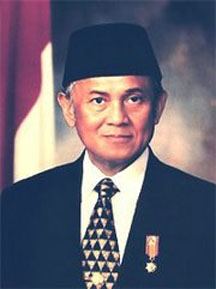
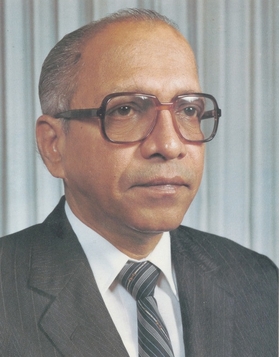
Raja Ali and Jeyaratnam (below, right) have a wealth of experience in the field of investment banking

According to sources, negotiations are being pursued at the moment, which are close to fruition and when completed, will result in ECM adding a new major core business to its current single staple of financial services activity, which will see its business transcend domestic boundaries.

“The new business is involved in a global high growth sector,” says a source. As a result of the deal, it is also believed that ECM will see the entry of a couple of key shareholders who are notable and prominent personalities in the international corporate stage.

It is further believed that Datuk Tony Fernandes of AirAsia Bhd fame will also emerge as one of the key investors in the newly enlarged group.

Sources say that Kalimullah and Lim's `return' to ECM signals that there are bigger plans waiting to unfold for the group in which the two personalities will play a major role. At this juncture, no one is quite ruling out the possibility that it may eventually result in them raising their stake in ECM.

Also interesting is that the rumour mill has been churning out speculation that ECM's investment banking business is up for grabs. However, sources close to the company deny such talks, saying that until the group manages to maximise the value and grow its investment banking business in terms of scale and profitability, it is not likely to be divested.

ECM, borne out of a highly publicised merger between ECM Libra Bhd and Avenue Capital Resources Bhd (ACRB) last June, provides a whole array of financial services namely investment banking, stockbroking, asset management and principal finance and investments.

The holding company of the enlarged group was incorporated on October 24 2005 as Avenue International Capital Bhd to facilitate a reorganisation exercise of ACRB Group, which saw the listing status of ACRB on Bursa Malaysia's main board transferred to ECM Libra Avenue on June 28 2006.

The shocking exit

In August last year, Kalimullah, ECM co-founder David Chua, as well as Khairy Jamaluddin, son-in-law of Prime Minister Datuk Seri Abdullah Ahmad Badawi, disposed of their stakes in the company. Both Chua and Khairy sold off their entire interest in the group while Kalimullah retained a stake of just under 5%.

At that point, tensions were running high, and there appeared to be much scrutiny among a pocket of society over the individuals' business involvements, more so in relation to the merger deal that was proposed between ECM Libra and Avenue Capital Resources Bhd.

Both Kalimullah's and Khairy's stakes were acquired by Amcorp Group Bhd while Chua disposed of his entire shareholding to a foreign fund management company.

“I am giving up to protect ECM,” Kalimullah had then said in an interview with a business magazine.

However, there appeared to be some disappointment among investors of ECM who bought into the company's shares on the potential that these well-connected and influential businessmen would be able to drive ECM to greater heights, more so because the investment banking business is very much one that thrives on relationships and networking.

“For as long as these individuals were in the driver's seat of ECM, investors thought there could be upside to be gained from investing in its shares. But when they left, some investors were nonplussed,” says an observer.
It appears that these individuals, or at least two of them, will soon be back in ECM to make good that promise of potential.

Yet, thus far, ECM has made some good strides and progress in the financial services sector.

For the year ended January 2007, sales rose by about 55% to RM121mil from the previous financial year. Group sales for the fourth quarter increased to RM41mil from RM16mil in the preceding year's corresponding quarter.

The improvement was largely attributed to better performance of the group's stockbroking business given the much-improved trading volume in the local bourse and higher placement fees.

Higher operating cost for the year, largely due to the combined costs of the merger (with ACRB), however led the group to post a lower pre-tax profit of RM19mil for the year against RM54mil previously. The decrease was also due to rationalisation expenses of RM17mil.

Considering the market's euphoric performance so far this year, ECM's performance for the first quarter of the year is likely to see further improvement, says an analyst.

In addition, the group's stockbroking subsidiary ECM Libra Avenue Securities Sdn Bhd is awaiting the approval of Bank Negara for an investment banking licence, which analysts reckon will materialise pretty soon and will allow the group to offer a more comprehensive range of investment banking activities which it currently is not able to do namely deposits taking.

According to global deal flow data provider Dealogic ECM Analytics, ECM Libra Avenue Securities ranked top spot in book runners for share placements (in terms of deal value and number of shares) in the primary and secondary market (refer to table).


Beefing up the IB team

The IB team of ECM is currently run by group deputy CEO T. Jeyaratnam who left Aseambankers to join the group in October last year. He replaced Cheah Teik Seng, who stepped down as CEO and is currently involved in a private equity firm.

With over 20 years experience in the field of investment banking, Jeyaratnam brings to the group a wealth of experience in corporate finance knowledge and skills. Chartered accountant Raja Ali Raja Othman, the deputy chief executive officer of the group's investment banking business, also has a sound knowledge and experience in both financial and corporate advisory services.

“The group has hired many skilled and experienced personnel to drive its IB and equity capital markets business. It's still on a recruitment drive. Almost everything is in place,” says a source close to the company.

The group has also been in the corporate limelight recently with the emergence of Tan Sri Azman Hashim as the single largest shareholder. He raised his interest in the company from 7.4% to over 22% after acquiring a block of shares in ECM from Aroma Teraju Sdn Bhd – a vehicle of the Minister of Finance Inc in late February this year.

While this has led to speculation that Azman has plans to play a bigger role in the company, other astute market observers say it may more likely be a pure investment opportunity for the banker.

The slew of changes in ECM has also attracted significant interest in the counter. Year to date, ECM shares have fared relatively well and have gained over 40%. It emerged as the third most heavily traded counter on Friday, gaining 7 sen to close Friday at RM1.04.


Tuesday, April 24, 2007

MAKING MALAYSIA CORRUPTION FREE

MAKING MALAYSIA CORRUPTION FREE
By Mohamed Jawhar Hassan*

The 2Ms attempted it 25 years ago. They launched the Bersih, Cekap dan Amanah initiative. They tried their best, but they did not succeed. Though the situation in Malaysia was much better than in most of the rest of the world, corruption continued unabated. Many even think that the problem grew worse.

Abdullah Badawi took over the reins and won the general elections that followed on a promise to wipe out corruption. Some felt that while it was laudable, the solemn pledge to eradicate corruption was politics, corruptionally unwise.

Corruption was too embedded and endemic to easily root out. The Mahathir administration had failed. The challenges were formidable, and there was every likelihood that the Abdullah administration too would fail. This would seriously undermine the new Prime Minister’s credibility, and dim his political star.

Progress

That Abdullah does mean business is shown by the fact that in the last three years there has been a record increase in the number of arrests made by the Anti Corruption Agency. From a total of 339 arrests in 2003, the number mounted to 497 in 2004, 485 in 2005 and 433 until October last year. The number of successful convictions has also increased substantially. A highly commendable 75 percent conviction rate is expected for 2006.

Further, the ACA was also beefed up, a National Integrity Institute was established, and a clear strategy to curb corruption is in place.

Scepticism

The public however has remained generally unconvinced despite this significant progress. Occasional reports of abuse of power and corruption and ineffectual enforcement have contributed to this sentiment. The 2006 Corruption Perception Index released by Transparency International appeared to reinforce negative perceptions. Malaysia slipped five ranks in the global survey of 163 countries, from 39 in 2005 to 44 in 2006, though in terms of score there was hardly any difference (from 5.1 to 5.0). Clearly, the progress achieved on the anti-corruption front did not register on perceptions. Perhaps it was a failure to effectively communicate the positive news. It must be noted too that despite the slip in ranking, three-quarters of the world is still behind Malaysia.

Political risk and courage

Pak Lah has also embraced other difficult “soft” development issues – transparency, accountability and more space for the media, besides greater credibility for political institutions. Notwithstanding that there is a compelling need to address all these issues if Malaysia is to become a fully developed country by 2020, the Prime Minister is further compounding his political risks, for the hardest issues to address are the soft issues. His administration becomes more vulnerable, because it is exposed to keener scrutiny and subject to higher standards. Governance is much easier in a more closed environment.

This risky course adopted by the Prime Minister suggests either political courage or political naiveté of the highest order. In the case of Abdullah it cannot be the latter, for he has been through too much. His courage deserves the full support of everyone – his colleagues in the cabinet, the political parties both in government and the opposition, public interest groups and the person in the street. For leaders like him are few and far between. His failure will be our failure.

A campaign by all

The campaign against corruption is one in which we all have a direct and important stake. It is easily one of the nation’s most formidable challenges, for corruption exists, to a greater or lesser extent, in the political structure, the bureaucracy and the business sector. The ordinary citizen too is implicated, by virtue of occasionally being the giver.

The government is presently consulting with a wide cross-section of business, public and private stakeholders on how best it can substantially enhance the effectiveness of the campaign against corruption. The outcome is eagerly awaited by all, not least the international community.

20 ideas

There are many critical and important things the government with the cooperation and participation of the major stakeholders can do, or do better. The following 20 ideas, some of them not entirely new, are perhaps worthy of consideration.
• The campaign cannot be a one-man mission. The Prime Minister must receive dedicated support and active participation at all levels and in all sectors.
• Designate the eradication of corruption as among the highest priorities of the nation.
• Adopt a no-nonsense, zero-tolerance approach to corruption eradication. A single-minded purpose should be inculcated at all levels and in all sectors.
• Set a realistic target, one that pushes the envelope, but is not impossible to accomplish. The present target of a ranking of 30 and score of 6.5 in 2008 cannot be achieved. Hong Kong, an oft-quoted success story, took a little more than 20 years to reach its 2006 ranking of 15 and score of 8.5, and Hong Kong is arguably a smaller and less challenging environment. Malaysia should aim for a minimum ranking of 20 and score of 8.0 by 2020, when it aspires to be fully developed. The score is more meaningful than the ranking. There should also be appropriate pragmatic annual, 2010 and 2015 intermediate targets. An annual increment of 2 ranks and score of 0.3 is perhaps desirable.
• Supplement the national target with corresponding state and institutional or departmental targets. It cannot be campaign by the centre alone, with the states neither seen nor heard.
• Apply key performance indicators at all levels and institutions.
• Strengthen a culture of integrity and abhorrence for corrupt practices in formal education, training programmes and public sensitisation campaigns.
• Raise investigation standards through better training and oversight among ACA and police officials as well as DPPs.
• Expedite court hearings of corruption cases.
• Make government services generally more transparent and accountable.
• Replace the Official Secrets Act with a Freedom of Information Act that ensures access to information that is of public interest, but which nevertheless provides for confidentiality on matters of national strategic and security interest.
• Reduce layers of bureaucracy and multiple tiers of approval without undermining efficiency and need for minimum check and balance.
• Provide more government services on-line, so that opportunities for corruption are reduced. On-line services should enable tracking of progress and stipulate minimum response times for enquiries.
• Consider increase in remuneration for low-wage groups especially for those working in urban high cost of living areas (for example through an increase in COLA or other benefits).
• To reduce the human factor, select and emplace only men and women of integrity for key high (corruption) risk positions (heads of service; heads of departments; oversight and investigation units; assessment agencies; and payment and collection units). The selection process must provide for this.
• Implement periodic rotation of officers in corruption-risk departments and positions, except for top key personnel of manifest integrity.
• Launch a high-impact drive against corruption with highly publicised arrests and disciplinary/legal action. The ACA now has increased manpower and resources for this purpose.
• Raise the penalty for offences under the Anti-Corruption Act and departmental regulations.
• Encourage whistleblowing and provide protection, incentives and non-monetary rewards for whistleblowers.
• Establish an independent Public Services Complaints Commission by Act of Parliament that is empowered to receive complaints and investigate corruption and misconduct in all branches of the public services as listed in the Federal Constitution – the general public service, the judicial and legal service, the police and armed forces, and others. The Commission should function as a complement to the ACA and departmental disciplinary bodies.

The exercise to reduce corruption will mutually complement and reinforce the other major initiative to improve delivery of services launched by the Abdullah administration. Both are sorely needed. They are part of the overall effort to improve governance and competitiveness, and position Malaysia firmly on the road to becoming a fully developed country by 2020.

They deserve our total support.


* The writer is Chairman and CEO of ISIS Malaysia. The views expressed are his own.


Saturday, April 21, 2007

Dayaks Lead Lives of Quiet Desperation

Dayaks lead lives of quiet desperation
By Terence Netto
Malaysiakini

PKR (People's Justice Party) advisor Anwar Ibrahim described the arrests of Iban landowners for alleged arson in the interior of Sarawak as "the latest chapter in the continuing saga of Dayak desperation" over native customary rights (NCR) land whose ownership is imperiled by logging and plantation agriculture companies.

The arrests of land rights activist Jacob Emang, Ziglar anak Kasau, Edward Ungga and Gerah ak Gugat in the Sri Aman division on April 12 followed police reports by a logging company that their mobile camps in Silantek had been torched. The four have been remanded until April 23.

Anwar described Dayaks in the interior of Sarawak as "living lives of quiet desperation that now and then flares up in action that invites police attention, not to mention the notice of the rest of Malaysians who don't quite know what it is to be under the tyranny of geography."

"Hence we in Semenanjung (peninsula) have little empathy for the plight of the Dayaks in the Sarawak interior," said the former deputy premier in remarks to malaysiakini on the arrests.

Anwar said the amendments to the land code in Sarawak in 2000 and 2001 had stoked fear among Dayak owners of NCR land that they were going to lose their inheritance to logging and plantation agriculture companies.

The 1958 Land Code: The Sarawak Land Code was implemented in 1958. Under this code, land in which native customary rights (NCR) had lawfully been created prior to 1st January 1958 is termed Native Customary Land (NCL). However, section 5(3) of the Land Code states that "any native customary rights may be extinguished by direction issued by the Minister" for "public purposes" or to facilitate alienation of land, which under Section 15A must be for the purpose of any undertaking that would, in the opinion of the Minister, be for the benefit of the State. In effect, as of 1958, NCL became a part of State land, and NCR can easily be disposed of. The indigenous people lost real control over their land.

The Land Code does state that any order to extinguish NCR must be accompanied by the payment of compensation to any person who can claim NCR on the land. However, claims for compensation must be made within 60 days of the order. After this time period, "native customary rights shall cease and be extinguished and the land held under such rights shall revert to the Government." As the indigenous people have limited access to legal resources, 60 days is often not enough for them to file their claims. Also, a 1996 amendment to the Land code removed the requirement that the indigenous people must be notified of any directions of extinguishments of NCR. This means that if the people do not have access to the District Office during the sixty-day period, they may lose their land without even knowing it.

Land the 'last bastion'

He said state government assurances that NCR land was not being threatened and that putting such land to economic use via logging and plantation agriculture did little to assuage Dayak fears of disinheritance. He described Dayak ties to NCR land as "mystic" and thus impervious to the market savvy calculations of planners for whom rising commodity prices made the sight of idle or poorly cultivated land a travesty of economics.

He said sources had told him that the four who were arrested owned NCR land in Abok in Sri Aman and that the logging company with a permit to extract timber had encroached on durian planted land belonging to the arrested NCR owners. The encroachment was by way of a path carved by the company enroute to the timber concession.

Anwar said the Dayaks' meagre educational opportunities, low skilled labour, and fragmented political leadership had conduced to poverty and made them regard their NCR land as the "last bastion" of their legitimacy as a people.

"They are the poorest community in Malaysia today and so the land issue has become an emotive one for them," he said.


Sarawak Chief Minister to sue Malaysiakini

Taib Mahmud, Sarawak CM to sue Malaysiakini
Apr 20, 07 1:56pm

Sarawak Chief Minister Abdul Taib Mahmud has demanded malaysiakini to remove several articles concerning accusations of corruption allegedly linked to him and his family. Taib, who has been the Sarawak leader for 26 years, said he would take legal action should malaysiakini refuses to do so in 48 hours. In the letter which was hand-delivered late yesterday to the malaysiakini office in Kuala Lumpur’s Bangsar Utama, Taib identified eight articles which he claimed were defamatory. These articles - published between April 6 and 14 - alleged that Taib has been implicated in a kickbacks scandal involving RM32 million in kickbacks paid by Japanese shipping companies for timber from the resource-rich state.


According to the report, the multi-million ringgit ‘commission’ - made over a period of seven years - was paid to a Hong Kong company said to be linked to Taib - who is the country’s longest serving chief minister - and his family. This was uncovered by Japanese tax authorities who deemed the payments made by the shipping companies as ‘illegitimate expenses’ since the Hong Kong agency, believed to be a paper company, did little ‘substantive work’ to justify the payments. According to tax authorities, the shipping companies had tried to disguise the payments as ‘business expenses’ and were thus not taxed. Japan Times reported that the shipping firms were likely to be slapped with well over 400 million yen (RM11.6 million) in back taxes along heavy penalties for ‘hiding’ the funds from tax authorities.


Following this, several members of parliament have urged the Anti-Corruption Agency (ACA) to investigate their colleague as Taib is also MP for Sarawak’s Kota Samarahan, near Kuching.

"The words contained in the above articles clearly referred to our client and were highly defamatory of our client," read the letter from Shearn Delamore & Co, the legal firm representing Taib.

It stated that the published articles "amount to a very serious libel" against Taib and has caused him "considerable distress and embarrassment". "These baseless allegations have lowered our client’s reputation in the estimation of the public and exposed him to hatred, contempt and ridicule." "All the allegations made against our client are false and your attack against our client is wholly unjustified," added the two-paged letter. The letter demanded malaysiakini to do the following:
• Stop from publishing defamatory words or similar words to that effect.
• Immediately publish a full public retraction and apology according to terms approved by Taib.
• Provide Taib with a written undertaking within 48 hours that the website will refrain from publishing defamatory words or similar words to that effect.
• Nominate a substantial compensation sum within 48 hours for injury and damage to Taib’s reputation.
• Indemnify Taib of all costs incurred in this matter.

The letter also stressed that should malaysiakini fail to provide a satisfactory response to the demands, legal action will be taken.

Contacted this morning, a representative from Shearn Delamore said he was unable to reveal whether parties other than malaysiakini have been issued similar legal letters. Malaysiakini: We'll fight In an immediate response, malaysiakini editor-in-chief Steven Gan said the online news website intends to fight the law suit. "Over the past seven years, we have published numerous reports on corruption. Malaysiakini is not in the business of apologising every time we report on such scandals. As journalists, we have a duty to report on such matters, which is of public interest," he added.

Prime Minister Abdullah Ahmad Badawi had last Thursday said that the ACA could investigate the allegations if a report is lodged.

However, Gan said ACA need not wait for a report to be filed to launch a probe on the matter. "In any case, now that reports have been lodged, there’s no excuse for ACA not to open an investigation on Taib," he added. According to Gan, the law suit was aimed at muzzling malaysiakini.

"If by filing the law suit, Taib hopes to intimidate us, he is dead wrong. When we go to court, we have a long list of witnesses whom we plan to call - starting with the ACA and Japan’s tax authorities," he said. "This could turn out to be the mother of all court battles."


Saturday, April 7, 2007

DEWANIAGA SARAWAK SCANDAL


Nine Japanese shipping companies that transport lumber from Sarawak, Malaysia, allegedly failed to report some 1.1 billion yen of income in total during a period of up to seven years through last March, sources said Wednesday, alleging the money constituted kickbacks to Sarawak officials via a Hong Kong agent.

Such tax irregularities have occurred as the Tokyo Regional Taxation Bureau determined the companies' remuneration payments to Regent Star, a Hong Kong agent, which has a connection with Chief Minister of Sarawak Taib Mahmud and his family, were rebates, not legitimate expenses, the sources said.

Although the Hong Kong agency did very little in the way of substantive work, the shipping companies are believed to have used rebates as a lubricant to facilitate their lumber trade, the sources added.

Lumber export is controlled by the Sarawak state government on grounds of forest resources protection.

Rejecting the tax authorities' conclusion, the shipping firms claim the transactions with Regent Star have been legitimate and deny wrongdoing.

The companies accused of the alleged tax evasion include Mitsui O.S.K. Kinkai Ltd. and NYK-Hinode Line Ltd. belonging to the Nanyozai Freight Agreement (NFA), a cartel formed in 1962 to avoid excessive competition in import of lumber from Southeast Asia. The 12-member group is exempt from the Antimonopoly Law.

The shipping firms will likely be slapped with well over 400 million yen in back taxes along with heavy penalties, the sources added.

According to NFA and other sources, the Japanese cartel concluded an agreement in 1981 with Malaysia's Dewaniaga Sarawak regarding lumber transport. Dewaniaga is a state-affiliated concern in charge of lumber export control and is headed by the Sarawak chief minister's younger brother.

Dewaniaga Sarawak (DNS), a company affiliated with the Malaysian state of Sarawak, instructed NFA members to pay so-called intermediation fees to the Hong Kong agent, Regent Star (RS). DNS is headed by Onn bin Mahmud, a brother of Sarawak Chief Minister Abdul Taib Mahmud. The Chief Minister's brother Onn bin Mahmud also sits on the board of CMS. Not only is Abdul Taib Mahmud Chief Minister, he's also the Resource Management and Planning Minister. That means he's also the Forestry Minister.


The Japan Times: Thursday, March 29, 2007
(C) All rights reserved

Saturday, March 31, 2007

MOHD. NAJIB TUN RAZAK IN TROUBLE: A series of Messy Scandles

Pressure mounts in Kuala Lumpur to put the brakes on a scandal-tainted Malay politico.

Speculation is increasing in Malaysia that of one of the country ‘s elite politicians, Deputy Prime Minister Mohd Najib Tun Abdul Razak, is in serious trouble due to a series of messy scandals.

There is considerable speculation that Najib, the son of Malaysia’s second prime minister, will be forced to step down from national politics. One rumour has him becoming chief minister of his native Pahang state, although the exit route for most discredited or politically suspect figures in Malaysia is a diplomatic or other posting overseas, according to sources contacted by Asia Sentinel. In any case, on March 13, he became sufficiently concerned that he called a press conference in his Pekan constituency to deny rumours that Prime Minister Abdullah Ahmad Badawi was considering dumping him in favour of Muhyidin Yassin, currently Minister of Agriculture and Aagro-based Industries and a Badawi ally.

Najib in better times

Najib is said to be fighting back on a several fronts, making the rounds of the old bulls of the United Malays National Organization(UMNO), Malaysia’s biggest political party, in an effort to save his career. In January, Najib reportedly flew to London to attempt to meet with Tun Mahathir Mohamad, the octogenarian former prime minister who still carries considerable clout inside UMNO, in an attempt to shore up his support. Mahathir reportedly declined to see him.

In particular Najib has been wounded by speculation of his involvement, however peripheral, in the murder of Altantuya Shaariibuu, the 28 year-old Mongolian beauty whose body was found in a patch of jungle outside a Kuala Lumpur on October 20. Two policemen from an elite Special Operations Force whose ultimate boss was Najib were arrested for the crime. Altantuya disappeared after attempting to confront Abdul Razak Baginda, the head of a think tank closely tied to Najib, over support for her 18-month-old son. Razak Baginda is also facing charges for conspiring in the murder.

Originally, a third member of the force – a 22-year-old woman lance corporal – was also arrested. She was never named in news stories by Malaysia’s government-friendly press and was released a week later without being charged. There is widespread speculation in Malaysia that she is the aide-de-camp and bodyguard to Najib’s wife, Rosmah Mansor.

Razak Baginda is scheduled to go on trial in June. The case leaves open the question of how two – and possibly three ‑ elite police officers became involved with a political analyst who has no formal government authority. The top leadership of UMNO, the dominant force in the ruling national coalition, have been tiptoeing gingerly around the case ever since the arrests in November.

Razak Baginda, originally scheduled to go on trial in March 2008, had his trial date moved up by months in an unusual move. That has raised additional questions in political circles over whether the move was engineered by Prime Minister Ahmad Abdullah Badawi or individuals close to him because there is evidence that would tie Najib to the case.

Kuala Lumpur’s energetic blogs are buzzing with rumors that prosecutors have a letter indicating that Najib asked Malaysia’s Immigration Department to issue the doomed Altantuya a visa, and that at one point Najib, Razak Baginda and Altantuya were said to have gone overseas from Malaysia together, although others point out that visitors from Russia, China, Mongolia and from lots of other countries can get visas very easily to visit Malaysia.

In addition to questions over the murder case, Najib is also under fire for the 2002 purchase by the Malaysian Ministry of Defense of three submarines that cost the treasury RM$4.5 billion (US$1.3 billion) for which a company controlled by Abdul Razak Baginda was paid a commission of RM510 million (US$147.3 million) in a sale that included no competitive tenders. Although Najib was cleared in an investigation at the time of the purchase, his position has been weakened enough by the Altantuya scandal that opposition politicians, particularly onetime Deputy Prime Minister Anwar Ibrahim, have again begun to assail him over it. On the Al-Jazeera television network, Anwar Thursday also questioned commissions paid over the purchase of 18 Russian Sukhoi-30 jet fighters in 2003 when Najib was defence minister.

"There are complicities over the huge and massive commissions accrued by the government involving the Defence Ministry, Defence Minister and Deputy Prime Minister Najib Tun Razak," said Anwar during the interview.Najib said he wouldn't respond to Anwar's charges. But, he told reporters recently, "Don't listen to the stories on the internet...they are all a myth. We should not react hastily, we must stick to principles and the truth...what is important is that we understand and know who will help us."

Driving Najib from national politics would be difficult. In addition to the cachet he enjoys from being his father’s son, as deputy party president he has strong ties among UMNO leaders in a career that goes back to 1978 as a functionary in the very strong UMNO Youth wing. The party’s nearly 200 division chiefs are key to his political wellbeing, and reports are that he has been wooing them assiduously, arranging in some cases for overseas junkets.

And, as UMNO goes, so goes Malaysian politics. Despite its endemic corruption and the pervasive sense of rot at the top, it appears highly unlikely that any outside political force could even dent it. Anwar Ibrahim, who was jailed on charges of sexual abuse that were widely perceived as spurious, has been leading a reform party movement, making speeches across the country about party corruption and in particular Najib’s connection to it.

But few believe Anwar has any chance to take down UMNO. The odds are instead that if Najib were to be sent packing, it would be at the behest of UMNO leaders who have decided he is too hot to handle, not by the country’s full electorate.


Thursday, March 29, 2007

"WALK THE TALK" MR. PM, INDICT ZULKIPLI !

Mr PM, indict Zulkipli!
by P Ramakrishnan
Aliran President
Wednesday, 28 March 2007

Anti-Corruption Agency chief Zulkipli Mat Noor can no longer be in office holding on to his position as Director General. It is an embarrassment to the ACA! An institution entrusted with the highly demanding responsibility of checking and eradicating corruption cannot be headed by an individual whose character and integrity comes under a cloud of suspicion. We cannot tolerate this absurd situation. The Prime Minister must surely understand this.

Zulkipli was not merely accused of being corrupt by any ordinary citizen. It was not a wild allegation by any means. But in this case, the accusation came from a senior (now retired) ACA official, Ramli Abdul Manan, who had investigated the issue of corruption involving Zulkipli. According to Ramli, the former Sabah ACA director, he had studied this particular case and had indeed filed his report in July 2006 alerting the ACA, the then Inspector-General of Police and the Prime Minister regarding Zulkipli's corruption. Strangely, no action was taken to pursue this matter.

Besides this, it has been disclosed that several reports dating back to 1997 were lodged with the police by a woman alleging sexual molestation and behaviour unbecoming of an official, who strangely seems to be enjoying the confidence of the authorities.

In spite of these earlier reports, Zulkipli’s contract was extended three times since his appointment by former Prime Minister Dr Mahathir Mohamad in 2001. (His current term ends on 31 March 2007.) We are now told that the police are investigating this case.

Notwithstanding this, further allegations of corruption have emerged with Dr Jeffrey Kitingan lodging a 24-page police report implicating Zulkipli with corruption.

What is really worrying Malaysians is that Zulkipli continues to be on duty and in service as Director General of the ACA. There is this real fear that, because of his top position, he has access to ACA files and information pertaining to his case. It is legitimate to wonder whether there is a possibility that evidence can be tampered with or witnesses threatened. This is something that cannot be easily dismissed or overlooked.

Zulkipli’s position in the ACA is tarnishing the image of the ACA. People are losing their confidence in the ACA as a body truly dedicated to wiping out corruption. When citizens no longer view the head of this very important agency as a man of impeccable character, then the entire outfit suffers. Its credibility is shattered and the very purpose of setting up the ACA is rightly questioned. We cannot have a person remaining in such a crucial office if his integrity has been called into question or if there is the slightest hint of irregularities.

Aliran is of the view that Zulkipli should be indicted. Indicting an officer while the case is being investigated is part of the disciplinary process. When an officer is cleared, he can be reinstated without suffering any loss in salary or seniority to his rank. Why should it be different for Zulkipli, Mr PM?


Monday, March 26, 2007

Problems of NEP: Is it the Policy or its Implementation


(Link edited by YM)

Former Deputy Prime Minister, Tun Musa Hitam seems to be playing to the non-Malay gallery. Last Dec in an interview with the largest circulated daily newspaper in the country, Sin Chew Jit Poh he was quoted as telling the GLCs to stop pinching Malay professionals from Chinese enterprises.

The story was picked up by the Sun newspaper on Dec 19. I find such a call most intriguing as I keep wondering how many Malay professionals have the GLCs pinched from the Chinese enterprises?

Subsequently I wrote to the Sun seeking Tun Musa to tell us how many Malay executives have the GLCs pinched from Chinese enterprises. For I keep wondering whether there are enough Malay professionals being employed in Chinese enterprises for them to be pinched in the first place? As expected the letter never got to see daylight.

(In that letter to the editor e-mailed on Christmas Day last year I had also responded to Chairman of the Malaysian Chapter of Transparency International, Tan Sri Ramon Navaratnam who had claimed that it was difficult for non-Malay companies to employ Malay professionals. In the report (Dec 21 issue of the Sun) he justified his claim to the “unavailability of suitably qualified Malay professionals and those with the right corporate values and attitudes of diligence and commitment”.

Isn’t it odd that on the one hand Musa had asked the GLCs to stop pinching Malay executives from the Chinese companies but Navaratnam had claimed that it was difficult for chinese companies to employ Malay executives and professionals. So if there are so few Malay professionals and executives being employed by the Chinese companies what is there for the GLCs to pinch? I found such claim really incredulous. I am sure Malay professionals would take umbrage to Navaratnam’s claims that Malay professionals and executives do not have the right corporate values and attitudes of diligence and commitment.

Navaratnam had also blamed extremists (Malays) for perpetrating and encouraging the myths of non-Malay companies not wanting to employ Malays. But I countered if what the Malays think as mere myths then he should give the figures to show otherwise. I am sure the Malays would like to know the number of Malay executives and professionals as well as the number of Chinese companies that have employed them.

It seems he made the generalisations that non-Malay companies find difficulty in getting Malay professionals just on the basis of an experience of the Sunway Group where he is a director. But I believe Sunway faced such difficulties out of its own reputation vis-à-vis the Malay professionals.

Navaratnam also claimed that the Malay professionals prefer to work in GLCs and government service where they are more comfortable. My rejoinder: so the Malay professionals are not suitable for non-Malay companies but they are OK with the GLCs and government because the government entities do not require diligence nor commitment from their staff? Is that why they are more comfortable there? So the Malays are not diligent nor committed in their work? Doesn’t such remarks smack of racialist sentiments?)

And in the face of such unprofessional and racist attitude by a very senior non-Malay corporate figure we now have a decision by the Advisory Panel of the Iskandar Development Region – made up of five very wise and influential men – that the race quota favouring the Malays should be done away with. The other members are tycoon Robert Kuok, Tan Sri Samsudin Osman former Chief Secretary to the Government, prominent Indian business tycoon Tan Sri Kishu Tirathai and economist Datuk Andrew Sheng.

Musa who made the announcement gave this reason: the Iskandar Development Region being actively promoted to upgrade development efforts in southern Johore can only succeed if policies favouring the Malays are dropped.

The IDR is the biggest project announced by the present government with the hope that it could spur economic growth with greater foreign participation not just for southern Johore but extending to other parts of the country as well.

It is indeed odd that a lot of people are making out as if affirmative action for the Malays is becoming a hindrance to greater economic growth. Foreign Direct Investment in the country is said to have dropped to RM15billion in 2005 from RM17.6 billion in 2004. And it looks as if the affirmative action in favour of the Malays is being made the scapegoat. Musa seems to agree. Thus the Advisory panel’s recommendations as articulated by Musa.

But we also know that foreigners would invest wherever they can make money even if they have to comply with various local requirements. So what’s the drift?

Is the NEP the real problem for it to get such a bad reputation? As I see it the problem is not the policy but its implementation. How can we blame the policy for the various problems when undeserved so-called Malay companies are selected for various jobs and projects merely because of political connections and other unprofessional considerations? In the end the Malays get the ‘shit’.

Now if implementation of the policy is at fault, the remedy is to ensure better and more transparent implementation. Do away with the political connections, the patronage and the ‘greasing of the palms’ for approvals. Not to discard the policy.

In any decision over awards of contracts or whatever jobs only the genuine Malay company should be considered. The rent seekers should not be considered at all. But this does not mean that a real working partnership between the Malay and non-Malay should not be considered.

It looks as if for the sake of the IDR we are willing to forgo anything, not just compromising Malay interests, but even to the extent of compromising our sovereignty over the region to the Singaporeans. Under the proposals Singaporeans can come and go as they pleased without having to go through Immigration and Customs formalities. It looks as if Johore is being made the playground for the Singaporeans.

Comparison is being made of how Shenzen in China had developed after being tied with Hong Hong. But it must be remembered that Hong Kong and Shenzen are part of the same country, whilst Singapore and Malaysia are two different nations.

And we know the mentality of the Singaporeans and how they looked upon us. But we seem to be going out of our way to please the Singaporeans.

A newspaper columnist Gavin Yap earlier this month has this to say of the Singaporeans arising from an encounter he had with a Singapore chick. She had kept on boasting of the many more opportunities available in the republic than in Malaysia, “better this, better that, more professional, more talent, blah, blah, blah”.

He wrote: “When I meet Singaporeans in Singapore, they never come across as annoying as they do when I meet them here. I mean, they're still annoying but something happens to them once they cross the bridge, I don't know. It's like they get possessed by demons hell-bent on making as few friends as possible.

“They get out of their car, look for the nearest local and hit them with the verbal equivalent of a baseball bat — Singapore this, Singapore that, cleaner, more efficient, everything works, everyone's pretty, everyone's rich, no crime, no pollution, no war, no sex, no fun, no problem!

“Yet, the moment they get here, every single one of them starts enjoying the simple freedoms that are not afforded to them back in their sterilised utopia. What freedoms, you ask? Well, let's count them, shall we?

“Littering, smoking, chewing, sucking, drinking, laughing, smiling, flicking, eating hawker food that actually tastes good, and meeting people who have the guts to venture outside without an Armani T-shirt. You see where I'm going with this?

“So, what gives, neighbours? What's the deal with the superiority complex? We know you've done well for yourselves. We know your shopping malls rock. We know your cinemas show uncensored movies. We know you're very pleased with your public transportation. We know you're very proud of your Esplanade.”

I responded to Mr. Yap’s very perceptive piece in a letter to the editor a few days after that. You guess it: the letter also never saw daylight.

Some excerpts: Actually I think the Singaporeans' behaviour towards us is not because they think they are superior. In fact it's the converse.

Deep within them is their inferiority complex of being small, a dot on the map as described by former Indonesia President, B.J. Habibie. Their being successful is to a certain extent also due to their being exploitative in their relationships with their immediate neighbours ie Indonesia and Malaysia. Thus this obsession to convince themselves that they are better. The one-upmanship, the kiasu mentality.

And at the same time they have this fetish of either Malaysia or Indonesia want to gobble them up. Thus the fortress mentality.

Their coming into being is also not something they would want to cherish. Especially when comparing to other countries that attained their independence after so much of struggles against their colonial masters and the sacrifices made by their people.

While in their case they were actually 'kicked out' by the founding first Prime Minister, Tunku Abdul Rahman Putra after the island's leaders, especially Lee Kuan Yew who went on the offensive to play up racial issues during the 1964 elections when the PAP contested for a number of seats for the federal parliament. Such campaign tone could compromise the somewhat fragile relationships between the Malays and the non-Malays then.

Despite the combative nature of the campaign by their leaders spearheaded by Lee Kuan Yew who had harped on the "Malaysian Malaysia" issue and continuously questioned Malays rights as enshrined in the Federal Constitution, the PAP lost. The Malaysian Chinese refused to be baited and thus only one of the PAP's candidates, C.V. Devan Nair who stood in Bangsar was returned even though the party had contested only in Chinese predominant areas.

Still Lee Kuan Yew cannot accept facts and continued with his "Malaysian Malaysia" rhetoric to the extent that by 1965 the atmosphere was racially charged and could easily have sparked some ugly incidents. The Tunku then felt it was becoming untenable and decided to cut off the cancerous lump thereby denying the PAP from continuing with its devisive rhetorics.

Lee Kuan Yew was stunned by the Tunku's reaction and decision. To their credit they not only survived the trauma of being cut off but made the best of that situation to carve out for themselves to becoming a developed nation within the space of less than 40 years.

Unfortunately they made the mistake of consulting and engaging the Israelis as their advisors since they had drawn a parallel to their existence of being surrounded by the Malays (Malaysia and Indonesia) to that of Israel which is surrounded by the Arabs.

But they forget that Singapore is no Israel. Singapore is a legitimate entity even if formed by being not wanted by the Malaysian leader then. Israel is not. It was illegally and artificially created by the British (the Balfour Declaration of 1917 made in a letter by the British Foreign Secretary, Arthur James Balfour to Lord Rothschild, a British Jewish leader for transmission to the Zionist Federation following the breakup of the Ottoman Empire with Britain agreeing to the Zionist plans for a Jewish "national home" in Palestine and then forcibly brought into being to place all the Jews unwanted by Europe in the land already occupied by the Palestinians after the Second World War).

So the Jews do have a legitimate fear of being pushed out by the Palestinians whose land they had illegally confiscated and occupied leading to millions of Palestinians being displaced as refugees until today. But this is not the case for Singapore. So what do they have to fear from Malaysia or Indonesia? Indonesia let alone Malaysia is not going to overrun that island. So why this obsessive fear and the siege mentality?

This can be explained by Lee Kuan Yew's obsession of making Singapore the rugged society able to withstand any pressures inside or outside. And the belief that they cannot be seen to give away anything lest they be seen as a weakling. So they need this self assurance that they are not 'pliable'.

And this uncompromising attitude has brought them to the current very low ebb in their relationships with Indonesia and Thailand. They cannot be seem to be weak at all but must always flex their muscles.

(Their relationships with Malaysia is no different. We still have the four unresolved issues to contend with even if the current leadership had placed them on the back burner merely because we are groveling to be pally with them and opening up the Iskandar Development Region to the full for the Singaporeans).

Thus the statement by its Foreign Minister, George Yeo earlier this month is not surprising at all. This is what he said: "From time to time we must expect countries to pressure us in the hope that we will give way to their demands. Singaporeans know that if we give in to such pressure, we would only invite more such pressures," so said Yeo in the Singapore parliament.

Their huge defense expenditure (averaging RM20billion a year) for the past 10 years has ensured the republic's armed forces especially its air force to be equipped only with the latest and the best war machines including combat air crafts and armaments including missiles.

This attitude of its leaders has rubbed off onto the ordinary Singaporeans. So Mr Gavin Yap's description of them is apt. They are so docile in their homeland but seem to be let loose as if they don't know what to do once out of their cage.


Sunday, March 25, 2007

Sarawak Politics 2006: 'Wake-Up Call' and 'Withering Dayakism'

Dr Neilson Mersat Ph.D (ANU), M.A. (UKM), B.A. (Hons) (UKM)
Department of Politics and International Relations
Universiti Malaysia Sarawak

The defeat of nine candidates from the Sarawak Barisan Nasional (SBN) coalition in the Sarawak state election held in May 2006 was regarded as a 'wake-up call' for the SBN. SBN was returned to power but with its pride dented. In fact, opposition inroads surprised even those in Sarawak. Prior to the dissolution of the State Legislative Assembly, SBN controlled 61 out of 62 seats. The defeat was, to a certain extent, a humiliation for SBN which has been long known as the bastion for the ruling [federal level] Barisan Nasional coalition in the East Malaysian state of Sarawak. For a component of the SBN, the Sarawak United People Party (SUPP), which lost eight seats to the opposition, it was a disastrous outing. Moreover, four of the defeated candidates were the party's top brass: one minister, one assistant minister, a mayor and a political secretary to the Chief Minister of Sarawak. In fact, SUPP supporters concurred that it was the hardest blow for their party since it was established in 1959. This prompted SUPP's chief, Tan Sri Dr George Chan, to make a public apology to the Chief Minister, Tan Sri Abdul Taib Mahmud and also to the Prime Minister, Datuk Seri Abdullah Badawi for SUPP's dismal performance. George Chan himself won, but with a majority sliced by half. For SUPP leaders, the tremendous decline in support for the party was due to their failure to address several important issues, which affected urban voters. For example, one of SUPP's defeated candidates attributed the party's defeat to the announcement made by the federal government just prior to the state election, regarding the sharp increases in oil prices. Another issue involved landowner concerns over the renewal of sixty-year land leases, mostly in Kuching and Sibu, which were about to expire within the next five years. They were also concerned that they would have to pay a high premium to renew their leases. They even asked for automatic renewal of land leases and that such leases be converted into grants in perpetuity. However, their requests were rejected.

Meanwhile, the 2006 election was considered the best outing so far for the opposition Democratic Action Party (DAP). The party was established in Sarawak in 1978 and only managed to make a breakthrough in the Sarawak State Legislative Assembly in 1996 when it won four seats. Support for the party, however, has been far from consistent, and in the 2001 state election the party only managed to win one seat. The electoral swing in the 2006 election meant that the DAP's six seats were now only two seats less than those held by the SUPP. The DAP claimed that it had regained support among urban voters who are predominantly Chinese. The SUPP, however, was subsequently penalized for its poor performance. On 25 September 2006, the Sarawak cabinet made an 'out of the norm' decision by appointing a civil servant to become the mayor of Kuching South City Council, a position which was 'traditionally' given to a SUPP member. The former mayor, Chan Sheng Kai, from SUPP had resigned in June 2006 after he lost to a DAP candidate. Unlike in urban areas, the political landscape in rural areas did not change much. As usual, election candidates capitalized on the Native Customary Rights (NCR) issue with the opposition claiming that the current practice of land development did not really benefit the landowners. However, SBN candidates argued otherwise. Ethnic passions were heightened using so-called 'Dayakism' sentiment to galvanize the Dayak voters. If the election results in the rural constituencies is anything to go by, then one can argue that rural voters remain loyal supporters of SBN except in the constituencies of Engkelili and Ngemah, where the SBN lost. Candidates from Barisan Bersatu Sarawak (BBS), which promised 'to build a new Sarawak', performed badly. SUPP's candidate in Engkelili lost to a candidate from Sarawak National Party (SNAP), while in Ngemah, an independent candidate trounced the SBN candidate from Parti Rakyat Sarawak (PRS). The two candidates who won against SBN candidates in the Dayak heartland were reportedly contemplating joining BN parties. It is not difficult to understand why they want to join SBN. They need to hook themselves into the patronage networks in order to serve their constituents more effectively. By providing them with those tangible benefits, which are known as 'development projects' (In Iban: projek pemansang), enables elected representatives to sustain their political support.

The significant increase in the number of opposition representatives in the State Legislative Assembly has created an excitement of sorts among the people in Sarawak. The stronger opposition presence was definitely welcomed by those who, for too long, felt that their voices have not been heard in an almost unanimously SBN state assembly. The State Legislative Assembly, which convened in July 2006 was very 'colourful' with nine opposition members representing three opposition parties: one from SNAP, six from DAP, one from Parti Keadilan and one independent. Indeed, the opposition members tried to make their presence felt by raising several issues pertaining to development in Sarawak. The NCR land issue was raised several times. The formerly 'quiet' state legislative assembly is no longer so. For example, all the DAP representatives refused to wear ceremonial dress for the opening ceremony of the State Legislative Assembly attended by the Governor. They claimed that the dress was too expensive and they did not want to burden taxpayers with the expense.

The election also saw an increase in the number of women representatives from two to six. Initially, there was strong opposition to the attempt to increase the number of women candidates among SBN members. For example, when a woman candidate was nominated for the Bekenu seat, she was opposed even by some of her own party supporters, who argued that the geographical nature of that constituency does not allow a woman representative to serve the people. Nonetheless, she managed to pull through and get nominated. She contested and won the seat for SBN.

Apart from the increased number of opposition members in the State Legislative Assembly, the ever-volatile nature of Dayak politics is also making Sarawak politics more exciting. On 25 July 2006, the Registrar of Societies (ROS) rejected the application to register another Dayak-based party, the Malaysian Dayak Congress (MDC). One reason cited by the ROS is that MDC, if approved, might have security implications. The decision by ROS not to register MDC as a political party also surprised many in Sarawak. The party was established and submitted its application to ROS in May 2005. Ironically, the new party claimed to be 'pro-BN' and indicated that they would join BN once registered. Earlier, in their attempt to get the party registered, they had also asked the Prime Minister to intervene and a human rights body, the Malaysia Human Rights Commission (SUHAKAM), to help. Nevertheless, their appeals fell on deaf ears. One of the implications of this decision is that Dayak leaders feel that their rights to establish a political party to champion their ethnic group are being denied. This decision might have some far reaching consequences. For example, a significant number of former Parti Bangsa Dayak Sarawak (PBDS) supporters are now 'party-less', after they had announced their intention to join MDC once it was registered. Thus, with the rejection of MDC's application, it will be interesting to watch the realignment in Dayak politics especially when the 'party-less' Dayak leaders make their move.

Meanwhile, the newly formed, Dayak-based party, Parti Rakyat Sarawak (PRS), is now facing a leadership crisis. The PRS was formed by former PBDS leaders in 2004 after the PBDS was deregistered. The party was admitted to the BN coalition in 2005. There are two factions in PRS and both claimed to be the rightful group to lead the party. ROS had sent a show cause letter seeking explanation as to why the party should not be deregistered. Prior to that, PRS had agreed to merge with the SPDP. In the words of another PRS leader, the merger would mean the 'empowerment of the rural communities'. Since PRS is in political limbo, the attempt to merge the two parties, PRS and SDPD, which was ostensibly to strengthen the voice of the rural voters, especially the Dayaks, has now been put on the back burner.

While Dayak politics remain volatile, the state leadership remains intact. When Taib Mahmud was sworn in again as the Chief Minister on 26 May 2006, he made a record of sorts by becoming the longest serving Chief Minister in Malaysia. He was appointed in 1981 by his uncle, Tun Abdul Rahman Yaakub, who was then the Chief Minister of Sarawak. This is his seventh term. Surprisingly, the succession issue, which was a 'hot issue' before the state election, no longer takes centre stage. A senior party leader, who was tipped to be his successor, was not even included in Taib Mahmud's new cabinet line-up. What is obvious is that Taib Mahmud is now set to bring Sarawak into the second phase of his 'politics of development'.

Among the rural voters who gave unwavering support to SBN, it is only logical that they should anticipate more intensive rural development, especially under the Ninth Malaysia Plan. Besides, they want to see the slogan 'more seats, more power, more development' (In Iban: mayuh kerusi, mayuh kuasa, mayuh pemansang) materialize. In their attempt to push for more development in the rural areas, several elected representatives from SBN have suggested that the government should propose more development in rural areas, where the actual strength of SBN lies. Of course, such a call is nothing new, as similar calls have been made many times in the past. Whether SBN is going to reciprocate the support they received in the May state election by intensifying more development, as expected by the rural voters, is yet to be seen. There is a lot that needs to be done in the rural areas. Despite having successfully 'leap-frogged' from being one of the three least developed states in Malaysia some twenty years ago, to now being one of the three most developed states, Sarawak has today the fourth highest number of hard core poor after Sabah, Kelantan and Terengganu. The hardcore poverty line in Sarawak is RM482 per month a family.

WATCHPOINT: Points of interest will be how SUPP strategizes to win back the support of urban voters who are predominantly Chinese and how the Abdullah-Mahathir spat in Kuala Lumpur will impact Sarawak politics.


Saturday, March 24, 2007

What caused the Great Inflation? And what might bring it back?

Anatomy of a hump
Mar 8th 2007 From The Economist print edition
(Link edited by YM)
What caused the Great Inflation? And what might bring it back?

IF YOU were to draw the path of inflation in the typical big, rich economy over the past half century, your picture would look much like a dromedary's back: a low flat line in the 1960s; a knobbly hump of high and volatile price rises in the 1970s; dramatic disinflation in the 1980s; and low, stable inflation rates since. Japan and Germany, which were quicker to quell inflation, are well-known exceptions. But for the rest, the shape and timing of the Great Inflation bulge look remarkably similar.

This is a bulge that today's central bankers are anxious not to repeat. So it is no surprise that several governors from America's Federal Reserve are attending a conference on March 9th to discuss a new report* on the Great Inflation, written by a weighty group of macroeconomists from academia and Wall Street.

Most scholars agree on a basic explanation of the hump, placing both blame and credit squarely on central bankers. Consumer prices accelerated in the late 1960s because monetary policy was too loose. German and Japanese central bankers realised this earlier than others and tightened policy accordingly. Eventually others followed suit, and general disinflation began in the early 1980s. Since then inflation has stayed under control because central bankers are credibly committed to price stability and far better at their job.

Beyond that broad tale lie several debates about important details. Economists differ on how much non-monetary phenomena, such as closer trade integration, affect the inflation process. They also offer competing explanations for why central bankers botched things so badly a generation ago. One possibility is that they simply got the numbers wrong, consistently overestimating their economies' speed limits. Others blame theoretical misjudgments, particularly the belief that higher inflation could buy a lasting drop in unemployment. A third approach emphasises political pressure. Inflation got out of hand because central banks were under the thumb of politicians who preferred rising prices to higher joblessness.

In this latest report the authors subject such controversies to painstaking cross-country forensics. They show that price stability across the G7 countries has been far more closely correlated than economic stability. Almost everywhere, inflation took off between 1969 and 1970. And every country, except Germany and Japan, failed to tame it until the mid-1980s. Output, however, was less tightly synchronised. Although recessions in many countries have become less wrenching in recent decades, output volatility began to ease in the mid-1980s in America, but not until the early 1990s in Britain, Canada and France.

What to make of these differences?
The Great Inflation, because it was felt simultaneously across countries, must have had a common cause. This cannot have been the 1970s oil shocks, because consumer prices started accelerating long before the price of crude did. Easy money is the only remaining suspect. And although the Great Disinflation was also simultaneous across many countries, GDP growth settled down at very different times. This implies that better monetary policy cannot take full credit for today's less painful recessions.

The statistical magnifying glass also casts doubt on some favourite alibis for monetary misrule. Bad data, for example, do not get central bankers off the hook: revisions to statistics on trend growth and unemployment were not big enough to excuse the scale of inflation. Instead, monetary policy was simply too loose. The authors show that the central bankers of the 1970s failed to adhere to the modern “Taylor rule”, a formula that links the appropriate level of short-term interest rates to the deviation of output from its trend and inflation from its target. Of course John Taylor, a Stanford economist, did not formalise his rule until 1993. But even without this guide, central banks should not have flunked the basic tenets of sound money.

Neither the Taylor rule, inflation targets nor any other bits of the modern central bankers' toolkit were necessary to end high inflation. But the scholars think these tools have helped to keep inflation down, which, in turn, has spawned a virtuous circle. When inflation is low and stable, a temporary uptick in consumer prices has far less impact on long-term price trends. The economists' model implies that less than 1% of a temporary price surge is translated into a permanent rise in inflation today, compared with 60% three decades ago.

That may give today's policymakers more leeway than their predecessors enjoyed. But since this wiggle-room is the legacy of low inflation volatility, it cannot be taken for granted. Were central bankers to lose their guard, inflation could soon resurge.

More worrying, the economists pour cold water on many a policymaker's favourite gauge of his own performance, namely the public's expectations of future inflation. Central bankers often cite low inflation expectations as evidence that monetary policy is appropriate. That may be a mistake. This paper argues that expectations were a good guide to future price pressure only when inflation was high. But now, if anything, inflation expectations are a backward-looking indicator, lagging measures of actual inflation. [Actual Inflation Rate = Expected Inflation Rate + Constant x (Actual Unemployment Rate – Natural Rate of Unemployment) The actual inflation rate is dependent on two factors: the expected inflation rate and the unemployment gap (the difference between the actual unemployment rate and the natural rate of unemployment)].

All told, this statistical sleuthing suggests today's central bankers have little room for complacency. Inflation remains low and stable because policymakers are vigilant, not because any deep, structural changes insulate the modern economy from price pressure. If central bankers relax, higher, more volatile inflation could easily return. Rudyard Kipling's camel, remember, got its hump for being “most 'scrutiatingly idle”.
* “Understanding the Evolving Inflation Process” by Stephen Cecchetti, Peter Hooper, Bruce Kasman, Kermit Schoenholtz and Mark Watson.


Thursday, March 22, 2007

Economic growth is not all in the numbers

Opinion: Economic growth is not all in the numbers
New Straits Times, 22 March 2007
by MOHAMED ARIFF

(Link edited by YM)

Trade is the lifeblood of the Malaysian economy. However, care must be exercised in interpreting trade statistics.

THAT Malaysia’s trade recently crossed the RM1 trillion mark was, indeed, great news. This represents an important milestone and a feather in the cap for the Malaysian economy. While the announcement was certainly newsworthy, the euphoria and hype it generated was a little disquieting. Some even went so far as to label Malaysia a trillion-ringgit economy, regardless of the fact that its gross domestic product (GDP) is still roughly one-half of that.

A closed economy’s GDP represents the sum of consumption and investment expenditures. With an open economy, exports are added to and imports are subtracted from the aggregate of domestic consumption and investment, to arrive at GDP. If exports exactly equal imports, trade numbers cannot affect the aggregate in the accounting sense. This does not mean that trade does not matter in the economic sense. It certainly does: In the absence of trade, domestic consumption and investment would be significantly lower.

The importance of trade to Malaysia can hardly be exaggerated. It is the lifeblood of the Malaysian economy. The country’s progress and prosperity is attributed primarily to its openness to foreign trade and investment flows. However, care must be exercised in interpreting the trade statistics.

There is much less to the RM1 trillion trade figure than meets the eye, as there is a lot of double, triple or even multiple counting. Most of the intermediate products imported are re-exported after domestic value-added. The high import content results in double counting, to the extent that a given item is counted twice, first as import and later as export.

What is more, since the bulk of the country’s international trade is conducted by multinational corporations with extensive regional production networks, intra-firm trade often entails movement of goods back and forth a number of times between countries for additional processing. Thus, it is possible for the same item to be imported twice and exported twice in a year, notwithstanding the greater value-added every time it is imported and re-exported. This seems to be typical for some of Malaysia’s trade with Singapore and China, which, by the way, is good for all. But the point is that domestic value-added in all this is only a small portion of the total RM1 trillion, which is not necessarily bad news either.

There is nothing sinister in all this. The trade figures are quite reliable and accurate. Given the ways in which trade flows are defined and measured the world over, RM1 trillion in trade is an achievement that Malaysia can rightly take pride in.

But care must be taken to ensure that no one is deluded into thinking Malaysia is already a trillion-ringgit economy. Malaysia has a long way to go before reaching the trillion-ringgit GDP threshold. If the economy can grow at an average annual rate of not less than seven per cent, it will take another 10 years to get there, which sounds fine. It will take a little longer if the average GDP growth rate were to fall below seven per cent per annum.

It is also noteworthy that, according to the Malaysian Institute of Economic Research (MIER) forecast, Malaysia’s trade will exceed RM2.6 trillion by 2020, with RM1.35 trillion exports and RM1.28 trillion imports. Given that trade accounts for roughly 200 per cent of Malaysia’s GDP, this would translate into a GDP of about RM1.3 trillion in 2020.

In the late 1980s and early 1990s, prior to the 1997-98 financial crisis, the Malaysian economy was growing at an average rate of about nine per cent per annum.

Such rapid growth cannot be repeated now, not only because the base is getting bigger but also because such growth, as experience has shown, is simply not sustainable.

The Malaysian economy was able to expand so fast, in excess of its potential, thanks primarily to imported labour and capital. It is now obvious that such input-driven growth is fraught with pitfalls. That Malaysia could grow too fast for its own good was one of the factors that contributed to the 1997-98 crisis.

Estimates at MIER show that Malaysia’s "potential" GDP growth, which implies full employment with no overheating, is 6.5 per cent. As an open economy, Malaysia will be subject to external fluctuations, with growth oscillating above or below the potential. The government’s target of six per cent average growth, seen in this light, appears to be fairly realistic, notwithstanding MIER’s somewhat conservative growth forecast of 5.8 per cent on the average for the medium term.

The trouble with GDP growth numbers is that the focus falls squarely on the quantum rather than the quality aspect of economic expansion. The kind of growth now taking place in the country is quite different from that experienced before, especially in terms of employment generation. Malaysia was quite successful in creating jobs not only for its own people but also for foreign migrant workers. This now seems to be a thing of the past. Last year, 249,000 jobs were created, which pales in comparison with the 429,000 new jobs added in 2005.Apparently, there is no meaningful relationship between Malaysia’s GDP growth and its employment growth.

Thus, it is hard to understand why employment could only expand by 2.3 per cent last year, despite the fairly robust GDP growth of 5.9 per cent. It is pertinent to recall that employment had grown at a faster pace of 2.8 per cent in 2001 despite sluggish GDP growth of just 0.4 per cent. Unemployment has remained stubbornly high at 3.5 to 3.6 per cent since 2001, despite reasonably good GDP performance. Also, the growing income disparity in the country (Malaysia) may have much to do with the fact that GDP growth does not readily translate into job growth.

The phenomenon of jobless growth is a cause for concern.

This trend is likely to persist, now that the Malaysian economy is moving up the value chain, away from unskilled, labour-intensive, low value-added operations towards skill-intensive, high value-added activities. As Malaysia is likely to create fewer jobs in the years ahead than before, care must be taken to ensure that a large chunk of them does not dissipate unnecessarily or carelessly into jobs for foreign migrant workers.


Professor Emeritus Mohamed Ariff is the executive director of the Malaysian Institute of Economic Research


Wednesday, March 21, 2007

Sabah: The Battleground For The UMNO Deputy President - Revisited

Sabah: The Battleground for the UMNO Deputy President

THE CORRIDORS OF POWER
by Raja Petra Kamarudin

Anwar Ibrahim managed to topple the then incumbent Deputy Prime Minister, Tun Ghafar Baba, by cornering Sabah. Sabah is certainly a most important state and the fact that in Sabah money talks and bullshit walks means that that is the state one should buy up and put in one’s pocket. And Najib did just that. Recently, he used RM50 million of Felda’s money to buy off the 25 Umno division heads there. After receiving RM3 million each from Abdullah Badawi in September last year, the 25 Umno Sabah division heads are now receiving another RM2 million each from Najib. Isn’t it nice being an Umno division leader, especially if you are a Sabah Umno division leader?

But is this enough for Najib to fend off any move to remove him? Time will tell and we are certainly in for interesting times ahead of us.
In May 2005, Malaysia Today carried a special report in two episodes called ‘Sabah: the battleground for the Umno Deputy Presidency’. These are some of the things we said then: It is said: the Battle of Britain was won on the playing fields of Eton. But that is what the English say. Malays have another saying. And that is: the Battle of Umno is won in the State of Sabah.Since we are in the mood for clichés, might as well I ramble on with some others.

It is said: those who forget history are doomed to repeat its mistakes. Well, on the flip side of the coin, those who remember history can also ape its successes. And Sabah is one case in point where history has taught us that one man’s loss was another man’s gain.

When Anwar Ibrahim took on the then Umno Deputy President and Deputy Prime Minister, Tun Ghafar Baba, he chose Sabah as his battleground. If he could defeat Ghafar in Sabah then he could take him on throughout the rest of Malaysia. Anwar did not even have to do that. Once Ghafar saw he had lost Sabah, he backed off, allowing Anwar to win the post uncontested. To attempt any defence against Anwar’s onslaught would have been futile. Once Sabah is gone he might as well retire and make way for Anwar.

That is how important Sabah is to whosoever aspires to be the top dog in Umno.As they say: (yet another cliché) there’s no point in trying to re-invent the wheel. Sabah is a proven formula. So, Sabah must be the battleground for anyone who wishes to take, or retain, the number two slot in Umno -- and the number two will be the one who traditionally goes on to become the top dog in Umno as well as Malaysia’s Prime Minister (and the phrase ‘top dog’ is not used as any mark of disrespect here). And I say ‘traditionally’ because this is not a party rule cast in stone.
Traditionally, whether you eventually do become number one or not, would all depend on whether you can sustain the number two slot. Anwar Ibrahim did not. Neither did Ghafar before him. And Musa Hitam before that too suffered the same fate. They all retired as number two and never made number one. Of course, if Tun Dr Ismail had not died prematurely, things may have worked out very differently, especially since Tun Razak died in office.

But Tun Dr Ismail died ahead of Tun Razak so everyone’s fortunes changed along the way and the end result was Malaysia ended up with Dr Mahathir Mohamad as Prime Minister for 22 long and dreary years...sigh...Okay, back to Sabah, what has Sabah got to do with all this? Simple, the Battle of Sabah has already begun. It in fact started awhile back as soon as Abdullah Ahmad Badawi took over as Prime Minister and Najib Tun Razak as Deputy Prime Minister soon after that.

The multi-billion Ringgit question is: how long will Abdullah stay on as Prime Minister and will Najib take over once he retires (or is forced into retirement -- which is a scenario that cannot be discounted taking into consideration his dismal performance as Prime Minister thus far)?

Not even Abdullah knows how long he will stay on as Prime Minister. It could be another five years. It could be ten years. There are many factors that would decide this and Abdullah may have no say in the matter. And there is no guarantee either that Najib would be taking over once Abdullah finally moves aside, whenever that may be.

I have said this before and I will say it again: 24 hours is a long time in politics. Anwar Ibrahim got reduced from being Dr Mahathir’s anointed successor (as confirmed by Dr Mahathir himself in Penang in late August 1998) to being ‘unemployed’ (on 2 September 1998) in a matter of days. If your political fortunes can change drastically in less than a week, what more if you need to linger for five or ten years? Much can happen in five or ten years to change the course of history. The 13 May 1969 race riots, Tun Dr Ismail’s and Tun Razak’s deaths, Umno’s entry into Sabah, the 1997 Asian Economic Crisis, and so on, all had a bearing on who eventually went on to become Malaysia’s Deputy Prime Minister or Prime Minister.

It is no secret that Abdullah’s son-in-law, Khairy Jamaluddin, wants to be the next Prime Minister after his father-in-law -- and he wants this to happen by the time he is 40. That is slightly over ten years from now.

So Khairy needs Abdullah to stay on for at least another ten years. If, for any reason, Abdullah has to retire prematurely, then Khairy’s fortunes would change. His chances of becoming the next Prime Minister are tied to Abdullah’s chances of staying on for another ten years or so. And, within the next ten years, Khairy needs to wangle himself into the number two slot in Umno -- meaning, he would then be the Deputy Prime Minister of Malaysia.

But this is easier said than done. Currently, the number two is Najib. And Najib too wants to be the next Prime Minister (and so would I if I was currently the number two) so he is not about to roll over and play dead. If Khairy wants Najib’s job he would have to fight for it. And Najib would certainly give Khairy a run for his money.

Khairy (read the Khairy Chronicles) has given himself ten years. This is what he told his close circle of friends who, understandably, are all excited over the prospect. He will go for broke these next ten years. If he makes it, well and fine, he will become Malaysia’s Sixth Prime Minister some time after 2015 (or maybe seventh if there is an ‘interim’ Prime Minister a la Goh Chok Tong of Singapore in the form of Anwar Ibrahim). If he does not, he will then move on and maybe build a new life for himself overseas. Either way Khairy has nothing to lose.

Khairy’s first task would be to dislodge Najib from the number two slot. The acid test would be the Sabah Chief Minister’s post. Khairy is backing the Chief Minister, Musa Aman, who is also the Umno Chief for Libaran. Najib, on the other hand, is backing Mohd Shafie Haji Apdal, the Umno Chief for Semporna and Federal Minister of Domestic Trade and Consumer Affairs.

If Najib can engineer the ousting of Musa and can successfully place his man on the throne, then his hold over Sabah would be secure, just like Anwar before this. However, if Musa gets to stay on as Chief Minister, then Najib would find Sabah tough going, just like what Ghafar experienced. And, as mentioned earlier, whosoever wins Sabah would have the better chance of making it to, or retaining, the number two slot in Umno.


Khairy is definitely going all out to ensure Najib’s man does not make it and that Musa stays. And Musa, because of the many ‘cases’ hanging over his head, would have to ensure he is in Khairy’s good books lest he gets inserted into the list of 18 ‘high profile’ corruption cases sitting on Abdullah’s table.

So let’s watch Sabah. What happens in Sabah would be a good indicator of how the fight for the number two slot in Umno is developing. If Musa is retained as Chief Minister, then Khairy would be in a very strong position to take on Najib. However, if Musa falls, then Khairy would be weakened, especially if his successor is a Najib man.

Sabah Umno has 25 divisions. Currently, 18 are opposed to Chief Minister Musa Aman while only seven support him.Sabah politics, just like in Sarawak, is unique in that ‘warlords’ call the shots and the federal government or the Umno headquarters have very little hold over the state -- worse still in Sarawak that does not even have any Umno presence there. That was the whole reason why Umno entered Sabah -- to control the state -- while Sarawak has ‘wisely’ resisted Umno’s entry into the state.

Musa is only useful to the federal leaders as long as he can control his 25 state divisions. If he cannot, then he is of no use to them and he might as well be removed. Musa’s future would therefore depend on how he is perceived by the federal leaders, in particular Prime Minister Abdullah Ahmad Badawi and his team -- ‘team’ here meaning, of course, Khairy Jamaluddin, his son-in-law.

Both Abdullah as well as his deputy, Najib Tun Razak, are fighting tooth and nail to extend their tentacles into Sabah, a state that in the past has been the kingmaker for those who aspire to move up Umno’s ladder -- or retain their positions as the case may be.

It is crucial therefore that Musa is able to give the impression he has a strong hold over the 25 divisions to convince the federal leaders he is able to serve them as their ‘proxy’ in Sabah.

Amongst those said to be opposed to Musa are:
  1. Datuk Haji Hajiji Mohd Noor, Bendahari Umno Sabah, Ketua Penaja Umno Bahagian Tuaran and Menteri Kerajaan Tempatan & Perumahan (a contender for the Chief Minister’s post)
  2. Datuk Haji Mohd Shafie Haji Apdal, Ketua Penaja Umno Bahagian Semporna (another contender for the Chief Minister’s post and staunch Najib loyalist)
  3. Datuk Haji Abdul Rahim Ismail, Ketua Penerangan and Menteri Pembangunan Pertanian Dan Industri Pemakanan (originally a ‘Musa man’ but recently turned foe)
  4. Datuk Seri Panglima Haji Osu Haji Sukam, Ketua Penaja Umno Bahagian Papar (rumoured that Musa recently bought him over with a sizeable amount of hard cash)
  5. Datuk Seri Panglima Kol. Dr Haji Lakim Haji Ukin, Ketua Penaja Umno Bahagian Beaufort (another contender for the Chief Minister’s post whom, it is rumoured, Musa has bought over with a sewerage project and timber concessions)
  6. Tan Sri Pandikar Amin Haji Mulia, Ketua Penaja Umno Bahagian Kota Marudu
  7. Datuk Abdul Ghapur Haji Salleh, Ketua Penaja Umno Bahagian Kalabakan
  8. Datuk Haji Masidi Manjun, Ketua Umno Bahagian Ranau, Penolong Setiausaha and Menteri Pembangunan Belia, Kebudayaan Dan Kemajuan Sukan (staunch Najib loyalist)
  9. Datuk Haji Sairin Karno, Ketua Penaja Umno Bahagian Keningau (it is rumoured Musa has bought him over with a timber concession)
  10. Datuk Bung Moktar Radin, Pejabat Umno Bahagian Kinabatangan (it is rumoured Musa has bought him over with a timber concession)
  11. Datuk Masrani Parman, Ketua Umno Bahagian Kudat
  12. Datuk Uzair Yahya, Ketua Penaja Umno Bahagian Sepanggar
  13. Tuan Faisal Daeigo, Ketua Umno Bahagian Kota Kinabalu (brother-in-law of Tan Sri Pandikar Amin Haji Mulia)
  14. Datuk Rizalman Abdullah, Ketua Penaja Umno Bahagian Tenom (it is rumoured Musa has bought him over with a timber concession)
  15. Abdul Ghani Mohd Yassin, Ketua Penaja Umno Bahagian Pensiangan (straunch supporter of Datuk Haji Abdul Rahim Ismail)
  16. Datuk Surady Kayong, Ketua Penaja Umno Bahagian Beluran
  17. Datuk Seri Panglima Haji Ampong Haji Puyon, Ketua Penaja Umno Bahagian Sandakan
  18. Samsu Baharum Haji Abd Rahman, Pemangku Ketua UMNO Bahagian Silam

And those in support of him are:

  1. Datuk Seri Panglima Haji Yahya Hussin, Setiausaha Perhubungan, Ketua Penaja Umno Bahagian Putatan and Timbalan Ketua Menteri/Menteri Pembangunan Masyarakat; John Ambrose, Ketua Penaja Umno Bahagian Penampang (staunch Najib loyalist but recently bought over by Musa with a timber concession)
  2. Datuk Hj. Tawfiq Datuk Abu Bakar Titingan, Ketua Penaja UMNO Bahagian Tawau/Pembantu Menteri Pembangunan Luar Bandar & Keusahawanan (controls all the projects in Tawau and Musa is using him to undermine Datuk Abdul Ghapur Haji Salleh)
  3. Datuk Haji Sapawi Haji Ahmad, Ketua Penaja Umno Bahagian Sipitang and Pembantu Menteri KewanganDatuk Haji Juhar Mahiruddin, Ketua Umno Bahagian Batu Sapi (close ally of Tan Sri Pandikar Amin Haji Mulia)
  4. Datuk Haji Musbah Hj Jamli, Ketua Umno Bahagian Kota Belud (close ally of Datuk Seri Panglima Haji Osu Haji Sukam)
  5. Datuk Hj Hanifah Aman, Ketua Umno Bahagian Kimanis (Musa’s brother)

Some time back there was much brouhaha when a senior minister in Abdullah’s government announced there are 18 high profile corruption cases which the Anti-Corruption Agency would soon be bringing to book. After that sudden outburst, the country reverted to silence.

According to Khairy, the government has not abandoned the cases. Far from it, the cases are still very much on the government’s radar screen. They just need to wait for the opportune time before pursuing them.On this list, according to what Khairy told his close associates, are ex-Prime Minister Dr Mahathir Mohamad, one-time Finance Minister Daim Zainuddin, International Trade Minister Rafidah Aziz, Deputy Prime Minister Najib Tun Razak, Najib’s wife Rosmah Mansor, Perlis Chief Minister Shahidan Kassim, Selangor Chief Minister Khir Toyo, and a few more -- basically all those viewed as a threat to either Khairy or his father-in-law.

Senior Umno officials feel the list is slightly too high-powered and smacks of another Anwar Ibrahim corruption/sodomy situation. They are of the opinion that, while Khairy may be all gung-ho in his spring cleaning, Abdullah would never dare go for it. Dr Mahathir and Daim are just too powerful and untouchable, and if Khairy presses his father-in-law to bring both these warlords to book it may spell the end for Abdullah.The same goes for Najib and Rosmah as well. As much as Khairy may be keen to remove Najib as number two together with whom he perceives as Najib’s ‘mastermind’, Rosmah, it would be too obvious that it is politics and not corruption that is the issue. So Najib and Rosmah may be just as untouchable as Dr Mahathir and Daim. As we all know, a Tsumani starts with an earthquake. Will there be a major tremor in Sabah that will trigger a political Tsunami, resulting in a significant power shift in Umno?

In the past, Sabah has been a factor in both Anwar’s and Abdullah’s political fortunes. Both Najib and Khairy hope, once again, Sabah would be able to play this role of kingmaker. But they must ensure, first of all, that ‘their man’ gets to sit on the Sabah throne.