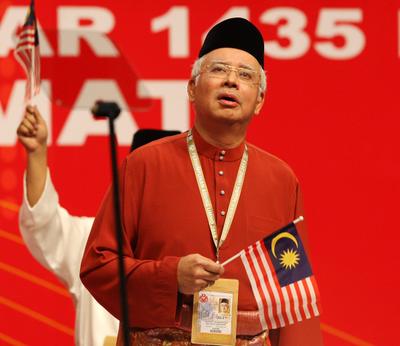
Saturday, July 31, 2010

Now let’s have a discussion — Tengku Razaleigh Hamzah

Now let’s have a discussion — Tengku Razaleigh Hamzah

July 31, 2010

JULY 31 — Thank you for inviting me to speak with you. I am truly honoured. I have played some small role in the life of this nation, but having been on the wrong side of one or two political fights with the powers that be, I am not as close to the young people of this country as I would hope to be. History, and the 8 o’clock news, are written by the victors. In recent years the government’s monopoly of the media has been destroyed by the technology revolution.

You could say I was also a member of the UKEC. Well I was, except that belonged to the predecessor of the UKEC by more than fifty years, The Malayan Students Union of the UK and Eire. I led this organisation in 1958/59. I was then a student of Queen’s University at Belfast, in a rather cooler climate than Kota Bharu’s.

Your invitation to participate in the MSLS was prefaced by an essay which calls for an intellectually informed activism. I congratulate you on this. The Youth of today, you note, “will chart the future of Malaysia.” You say you “no longer want to be ignored and leave the future of our Malaysia at the hands of the current generation.” You “want to grab the bull by the horns... and have a say in where we go as a society and as a nation.”I feel the same, actually. A lot of Malaysians feel the same. They are tired of being ignored and talked down to by swaggering mediocrities.

You are right. The present generation in power has let Malaysia down.

But also you cite two things as testimony of the importance of youth and of student activism to this country, the election results of 2008 and “the Prime Minister’s acknowledgement of the role of youth in the development of the country.”

So perhaps you are a little way yet from thinking for yourselves. The first step in “grabbing the bull by the horns” is not to required the endorsement of the Prime Minister, or any Minister, for your activism.

Politicians are not your parents. They are your servants. You don’t need a government slogan coined by a foreign PR agency to wrap your project in. You just go ahead and do it.

When I was a student our newly formed country was already a leader in the postcolonial world. We were sought out as a leader in the Afro-Asian Conference which inaugurated the Non-Aligned Movement and the G-77. The Afro-Asian movement was led by such luminaries as Zhou En-lai, Nehru, Kwame Nkrumah, Soekarno. Malaysians were seen as moderate leaders capable of mediating between these more radical leaders and the West. We were known for our moderation, good sense and reliability.

We were a leader in the Islamic world as ourselves and as we were, without our leaders having to put up false displays of piety. His memory has been scrubbed out quite systematically from our national consciousness, so you might not know this or much else about him, but it was Tengku Abdul Rahman established our leadership in the Islamic world by coming up with the idea of the OIC and making it happen.

Under his leadership Malaysia led the way in taking up the anti-apartheid cause in the Commonwealth and in the United Nations, resulting in South Africa’s expulsion from these bodies.

Here was a man at ease with himself, made it a policy goal that Malaysia be “a happy country”. He loved sport and encouraged sporting achievement among Malaysians. He was owner of many a fine race horse.

He called a press conference and had a beer with his stewards when his horse won at the Melbourne Cup. He had nothing to hide because his great integrity in service was clear to all. Now we have religious and moral hypocrites who cheat, lie and steal in office but never have a drink, who propagate an ideologically shackled education system for all Malaysians while they send their own kids to elite academies in the West.

Speaking of football. You’re too young to have experienced the Merdeka Cup, which Tunku started. We had a respectable side in the sixties and seventies. Teams from across Asia would come to play in Kuala Lumpur. Teams such as South Korea and Japan, whom we defeated routinely. We were one of the better sides in Asia. We won the Bronze medal at the Asian games in 1974 and qualified for the Moscow Olympics in 1980. Today our FIFA ranking is 157 out of 203 countries. That puts us in the lowest quartile, below Maldives (149), the smallest country in Asia, with just 400,000 people living about 1.5 metres above sea level who have to worry that their country may soon be swallowed up by climate change. Here in ASEAN we are behind Indonesia, Thailand, Singapore, whom we used to dominate, and our one spot above basketball-playing Philippines.

The captain of our illustrious 1970’s side was Soh Chin Aun. Arumugam, Isa Bakar, Santokh Singh, James Wong and Mokhtar Dahari were heroes whose names rolled off the tongues of our schoolchildren as they copied them on the school field. It wasn’t about being the best in the world, but about being passionate and united and devoted to the game.

It was the same in Badminton, except at one time we were the best in the world. I remember Wong Peng Soon, the first Asian to win the All-England Championship, and then just dominated it throughout the 1950. Back home every kid who played badminton in every little kampong wanted to call himself Wong Peng Soon. There was no tinge of anybody identifying themselves exclusively as Chinese, Malays, Indian. Peng Soon was a Malaysian hero. Just like each of our football heroes. Now we do not have an iota of that feeling. Where has it all gone?

I don’t think it’s mere nostalgia that that makes us think there was a time when the sun shone more brightly upon Malaysia. I bring up sport because it has been a mirror of our more general performance as nation. When we were at ease with who we were and didn’t need slogans to do our best together, we did well. When race and money entered our game, we declined. The same applies to our political and economic life

Soon after independence we were already a highly successful developing country. We had begun the infrastructure building and diversification of our economy that would be the foundation for further growth. We carried out an import-substitution programme that stimulated local productive capacity. From there we started an infrastructure buildup which enabled a diversification of the economy leading to rapid industrialisation. We carried out effective programmes to raise rural income and help with landless with programmes such as FELDA. Our achievements in achieving growth with equity were recognised around the world. We were ahead of Our peer group in economic development were South Korea, Hong Kong, Singapore and Taiwan, and we led the pack. I remember we used to send technical consultants to advise the South Koreans.

By the lates nineties, however, we had fallen far behind this group and were competing with Thailand and Indonesia. Today, according to the latest World Investment Report, FDI into Malaysia is at about a twenty year low. We are entering the peer group of Cambodia, Myanmar and the Philippines as an investment destination. Thailand, despite a month long siege of the capital, attracted more FDI than we did last year. Indonesia and Vietnam far outperform us, not as a statistical blip but consistently. Soon we shall have difficulty keeping up with The Philippines. This, I believe, is called relegation. If we take into account FDI outflow, the picture is even more interesting. Last year we received US$1.38 billion (RM4.40 billion) in investments but US$ 8.04 billion flowed out. We are the only country in Southeast Asia which has suffered nett FDI outflow. I am not against outward investment. It can be a good thing for the country. But an imbalance on this scale indicates capital flight, not mere investment overseas.

Without a doubt, Malaysia is slipping. Billions have been looted from this country, and billions more are being siphoned out as our entire political structure crumbles. Yet we are gathered here in comfort, in a country that still seems to ‘work.’ Most of the time. This is due less to good management than to the extraordinary wealth of this country. You were born into a country of immense resources both natural and cultural and social. We have been wearing down this advantage with mismanagement and corruption. With lies, tall tales and theft. We have a political class unwilling or unable to address the central issue of the day because they have grown fat and comfortable with a system built on lies and theft. It is easy to fall into the lull caused by the combination of whatever wealth has not been plundered and removed and political class that lives in a bubble of sycophancy.

I urge you not to fall into that complacency. It is time to wake up. That waking up can begin here, right here, at this conference. Not tomorrow or the day after but today. So let me, as I have the honour of opening this conference, suggest the following:

  • Overcome the urge to have our hopes for the future endorsed by the Prime Minister. He will have retired, and I’ll be long gone when your future arrives. The shape of your future is being determined now.
  • Resist the temptation to say “in line with” when we do something. Your projects, believe it or not, don’t have to be in line with any government campaign for them to be meaningful. You don’t need to polish anyone’s apple. Just get on with what you plan to do.
  • Do not put a lid on certain issues as “sensitive” because someone said they are. Or it is against the Social Contract. Or it is “politicisation”. You don’t need to have your conversation delimited by the hyper-sensitive among us. Sensitivity is often a club people use to hit each other with. Reasoned discussion of contentious issues builds understanding and trust. Test this idea.
  • It’s not “uber-liberal” to ask for an end to having politics, economic policy, education policy and everything and the kitchen sink determined by race. It’s called growing up. Go look up “liberal” in a dictionary.
  • Please resist the temptation to say Salam 1 malaysia, or Salam Vision 2020 or Salam Malaysia Boleh, or anything like that. Not even when you are reading the news. It’s embarrassing. I think it’s OK to say plain old salam the way the Holy Prophet did, wishing peace unto all humanity. You say you want to “promote intellectual discourse.” I take that to mean you want to have reasonable, thought-through and critical discussions, and slogans are the enemy of thought. Banish them.
  • Don’t let the politicians you have invited here talk down to you.
  • Don’t let them tell you how bright and “exuberant” you are, that you are the future of the nation, etc. If you close your eyes and flow with their flattery you have safely joined the caravan, a caravan taking the nation down a sink hole. If they tell you the future is in your hands kindly request that they hand that future over first. Ask them how come the youngest member of our cabinet is 45 and is full of discredited hacks? Our Merdeka cabinet had an average age below thirty. You’re not the first generation to be bright. Mine wasn’t too stupid. But you could be the first generation of students and young graduates in fifty years to push this nation through a major transformation. And it is a transformation we need desperately.
  • You will be told that much is expected of you, much has been given to you, and so forth. This is all true. Actually much has also been stolen from you. Over the last twenty five years, much of the immense wealth generated by our productive people and our vast resources has been looted. This was supposed to have been your patrimony. The uncomplicated sense of belonging fully, wholeheartedly, unreservedly, to this country, in all it diversity, that has been taken from you.

Our sense of ourselves as Malaysians, a free and united people, has been replaced by a tale of racial strife and resentment that continues to haunt us. The thing is, this tale is false.

The most precious thing you have been deprived of has been your history. Someone of my generation finds it hard to describe what must seem like a completely different country to you now. Malaysia was not born in strife but in unity. Our independence was achieved through a demonstration of unity by the people in supporting a multiracial government led by Tengku Abdul Rahman. That show of unity, demonstrated first through the municipal elections of 1952 and then through the Alliance’s landslide victory in the elections of 1955, showed that the people of Malaya were united in wanting their freedom.

We surprised the British, who thought we could not do this.

Today we are no longer as united as we were then. We are also less free. I don’t think this is a coincidence. It takes free people to have the psychological strength to overcome the confines of a racialised worldview. It takes free people to overcome those politicians bent on hanging on to power gained by racialising every feature of our life including our football teams.

Hence while you are at this conference, let me argue, that as an absolute minimum, we should call for the repeal of unjust and much abused Acts which are reversals of freedoms that we won at Merdeka.

I ask you in joining me in calling for the repeal of the ISA and the OSA. These draconian laws have been used, more often than not, as political tools rather than instruments of national security. They create a climate of fear. These days there is a trend among right wing nationalist groups to identify the ISA with the defence of Malay rights. This is a self-inflicted insult on Malay rights. As if our Constitutional protections needed draconian laws to enforce them. I wish they were as zealous in defending our right not to be robbed by a corrupt ruling elite. We don’t seem to be applying the law of the land there, let alone the ISA.

I ask you to join me in calling for the repeal of the Printing and Publications Act, and above all, the Universities and Colleges Act. I don’t see how you can pursue your student activism with such freedom and support in the UK and Eire while forgetting that your brethren at home are deprived of their basic rights of association and expression by the UCA. The UCA has done immense harm in dumbing down our universities.

We must have freedom as guaranteed under our Constitution. Freedom to assemble, associate, speak, write, move. This is basic. Even on matters of race and even on religious matters we should be able to speak freely, and we shall educate each other.

It is time to realise the dream of Dato’ Onn and the spirit of the Alliance, of Tunku Abdul Rahman. That dream was one of unity and a single Malaysian people. They went as far as they could with it in their time. Instead of taking on the torch we have reversed course. The next step for us as a country is to move beyond the infancy of race-based parties to a non-racial party system. Our race-based party system is the key political reason why we are a sick country, declining before our own eyes, with money fleeing and people telling their children not to come home after their studies.

So let us try to take 1 Malaysia seriously. Millions have been spent putting up billboards and adding the term to every conceivable thing. We even have cuti-cuti 1 Malaysia. Can’t take a normal holiday anymore.

This is all fine. Now let us see if it means anything. Let us see the Government of the day lead by example. 1 Malaysia is empty because it is propagated by a Government that promotes the racially-based party system that is the chief cause of our inability to grow up in our race relations. Our inability to grow up in our race relations is the chief reason why investors, and we ourselves, no longer have confidence in our economy. The reasons why we are behind Maldives in football, and behind the Philippines in FDI, are linked.

So let us take 1 Malaysia seriously, and convert Barisan Nasional into a party open to all citizens. Let it be a multiracial party open to direct membership. PR will be forced to do the same or be left behind the times. Then we shall have the vehicles for a two party, non-race-based system.

If Umno, MIC or MCA are afraid of losing supporters, let them get their members to join this new multiracial party. PR should do the same. Nobody need feel left out. Umno members can join en masse. The Hainanese Kopitiam Association can join whichever party they want, or both parties en masse if they like. We can maintain our cherished civil associations, however we choose to associate. But we drop all communalism when we compete for the ballot. When our candidates stand for Elections, let them ever after stand only as Malaysians, better or worse.

Now let’s have a discussion.

* Tengku Razaleigh Hamzah’s speech at the UKEC’s Fourth Malaysian Students Leadership Seminar in Kuala Lumpur on July 31, 2010.

Wednesday, March 10, 2010

Charge NH Chan for contempt or resign, CJ?

by Martin Jalleh

MARCH 10 — The integrity of the judiciary has been badly mauled by a legal lion who does not mince his words no matter how high or mighty a judge thinks he is. He has called a spade a spade and certain members of the judiciary an “incompetent” and even an “idiotic” bunch!

All the Chief Justice (CJ) and the judges in the palace of Justice have managed to do is remain mum, mute and mumble amongst themselves as NH Chan methodically makes them out for who they really are and the mockery they have made of the law!

The respected, renowned and retired Justice NH Chan is very frustrated, fed-up and furious at how the judiciary which he had served so faithfully has been reduced to a farce run by those who are legal and intellectual frauds or what he has called “imposters”!

With each passing compromised judgment NH Chan unhesitatingly hits out at judges with an increasingly sharper sting. He leaves no stone unturned, no errant judge uncovered. They can “no longer mask their hyperbole judgments with unintelligible garbage”.

“Fools on the bench”

In his latest scathing critique, he said the rakyat is “stunned by the ignorance of our judges of the highest court in the land”, as seen in the recent Federal Court’s decision not to review Anwar Ibrahim’s application to review its previous decision dismissing his application for disclosure of documents for his second sodomy trial.

NH Chan said the Federal Court’s approach to Rule 137 of the Rules of the Federal Court 1995 was “inconsistent” and “dishonest” and “those ignoramuses” were talking “utter nonsense”. Those “inane judges cannot even understand plain English”! He put it very plainly and painfully!

Calling the three-member panel of Justice Zulkefli Ahmad Makinuddin, Mohd Ghazali Mohd Yusoff and Heliliah Mohd Yusof “incompetent”, he added “perhaps they were clowns as their statements were laughable”.

His searing criticism was that they “…do not know justice from injustice”, and that “such lowly individuals should never be allowed to sit on the seat of Justice…(and) to be judges at all. And yet there are so many of them in the judiciary today ever since the rot begun.”

He shredded into smithereens the “judicial renaissance” of the CJ: “Our country does not need impostors, who pose as judges, to deceive the common people any longer. The common citizenry can now uncover the impostors hiding beneath the mantle of the judicature.”

He laid bare the judicial sham: “With judges such as these in the Malaysian judiciary where, to them, the principles of the law are not to be consonant with justice to be manipulated by them to uphold injustice, it is no wonder that the errant judges have forfeited the confidence of the people. “

He left them with a stinging slap in the face: “The general public does not respect such judges anymore! They have put themselves beyond the pale. Just like pariahs. Don’t you think they should be despised?”

On High Court judge Justice Mohamad Zabidin Mohd Diah’s rejection of Anwar’s application to have the judge recuse himself from further hearing the sodomy trial, NH Chan said that the judge was talking “utter nonsense” and “knew next to nothing about judicial bias”.

He added that the “moral of this unsavoury episode” is this: if you appoint mediocre lawyers to the Bench you will get substandard judges. The solution to this problem is a simple one. Appoint judges from the cream of the legal profession and you will not find me assailing the judges for incompetence simply because I will not be able to do so.”

Such was his cutting conclusion: “It is only when we have fools on the bench that I can point out that what they have decided is not the law.”

“Bunch of idiots in high places”

NH Chan had not spared the judges in the cases related to the Perak constitutional crisis of his very strong language when scrutinising their decisions (with the exception of Kuala Lumpur High Court Justice Abdul Aziz Abdul Rahim whom he had praised).

He highlighted the “bad” and “perverse” judgments, especially those in the appellate courts, the collective written judgements which were “riddled with contradictions” and how the Perak and Federal Constitutions were toyed with and trampled on by the judges!

During the Perak debacle NH Chan had said that there are “many of our judges today especially among those judges in the higher echelon of the judicial hierarchy who do not seem to know the true meaning of separation of powers in constitutional law. This is most apparent.”

He called some of the judges of the cases of the Perak imbroglio: a) Bad judges — they “seem to think that independence means that they can do what they like” b) Recalcitrant judges — “they think that words can mean whatever they want them to mean” c) Humpty Dumpty judges — “they also think that they are independent of the legislature”.

NH Chan has brought to light how beholden the judiciary is to the Umno-dominated Government. He said the “so-called Perak crisis has brought out a host of cases that showed that the judges gave the impression that they were one-sided. The perception of the people is that they sided with the BN government.”

In the “shocking case” of Zambry v Sivakumar in the Federal Court, he called the judgment by the “infamous five” (judges) Alauddin Mohd Sheriff , Arifin Zakaria, Nik Hashim Ab Rahman, Augustine Paul and Ahmad Makinnuddin, a “perverse decision”.

In the case of Nizar vs Zambry he called the panel of five Federal Court judges made up of the President of the Court of Appeal Alauddin Mohd Sheriff, Chief Judge of Malaya Arifin Zakaria, Zulkefli Ahmad Makinuddin, Ghazali Mohd Yusoff and Abdul Hamid Embong, “myopic judges”.

They “were lost in a quagmire of confused thinking caused by their own incompetence. They found themselves deep in the forest unable to see the wood for the trees. Does this mean that we have a bunch of incompetent judges who sit in the highest court in the land?”

Alas, with the help of NH Chan the public especially those in Perak were able to see for themselves how members of the judiciary had left behind a dead constitution, “bad” and “perverse” decisions, dubious declaratory orders, judgments devoid of reasoned grounds, and disgraceful double standards.

Blind and Biased Judges

NH Chan has “judged the judges”. He considers them, especially those in the appellate courts’ “ignorant”, “inane”, “incompetent” and even “idiots” (which he has strongly inferred).

The public shares his view. In their eyes the judiciary has allowed itself to be intimidated, its independence and impartiality interfered with, and its integrity reduced to ignominy.

In the light of the severe criticism of NH Chan of the judiciary (which is quite unprecedented by a retired judge), surely the Chief Justice cannot stand idly, silently and stoically by — unless Zaki Azmi strenuously, staunchly and solemnly agrees with him!

Further if Zaki continues to remain silent the public will assume that he shares NH Chan’s searing criticism of the judiciary. Logically he would have to resign for he has allowed the reputation of the judiciary to be sullied irreparably.

The judicial shenanigans whom NH Chan has criticised and castigated should also resign for having shamelessly sacrificed justice on the altar of political expediency.

NH Chan’s comments on members of the judiciary have no doubt been bold, blunt and blistering. He has accused judges of being blind, biased and being a bunch of “idiots” and “fools”. He has thrown the gauntlet down.

If the CJ disagrees with NH Chan’s criticisms he should haul the former Court of Appeal judge into court and demand that the latter shows cause for why he should not be cited for contempt! Does Zaki have the guts to take up the gauntlet or will he prefer to allow the judicial circus to go on?

NH Chan has made no bones about it. His blitzkrieg on the judiciary will continue. “Bad guys” had better beware! He will ensure that their names remain in infamy for generations to come unless they recant the wrongs that they have done! He will even write their obituary and if they outlive him there will be others who will take his place!

NH Chan sees the next general elections as the only solution to an unsalvageable judiciary viewed by the public with greater suspicion, scepticism and even scorn. He once commented: “At the present time and judging by what we have experienced so far from the Perak takeover cases, the quality of most of our judges is suspect”.

“In the meantime what should we do with so many bad apples in the barrel? If only there could be a change in government in the next general elections with the opposition winning by a landslide. Then we could get rid of all the bad apples by Act of Parliament.” - The Malaysian Insider

Sunday, February 21, 2010

An Unhappy Chinese New Year?


Martin Jalleh
Sunday, 21 February 2010 03:55

A CHINESE New Year has dawned. The Prime Minister declares that Malaysian Chinese should be daring to help build a more dynamic 1Malaysia.

Such a dramatic invitation by Najib Abdul Razak is made against the dark and depressing background of discordant voices by Umnoputras which the drums and deafening firecrackers fail to drown out and exorcise.

We hear the disturbing insult of all the Ahmad Ismails labelling the Malaysian Chinese "immigrants" and "squatters" and adding that they have no right to equal treatment with the Umnoputras – who just happened to migrate here a little earlier than the rest of us.

Lost in translation

We hear the deranged Nasir Safars spitting on us in 1Malaysia seminars with their vile claim that our mothers and grandmothers came here to sell their bodies, whilst never mentioning how the Umnoputras sell their principles, souls and even the country away.

We hear the devious speeches of Umno “intellectuals” in the Biro Tatanegara such as the ridiculous claim of a Chinese conspiracy with Singapore, when the Malays are disunited, to topple the Malay government, when very obviously the BTN courses are meant “to promote certain government leaders” (Nazri Aziz) and to protect, perpetuate and preserve their political power!

We hear the disgraceful racist rant of all the Abdul Rauf Yusohs in closed-door Umno functions abroad and at home calling non-Malays “‘bangsa asing” and accusing them of “trampling on the Malays in ''Tanah Melayu'', when the glaring reality is that of Umnoputras trampling on each other and on ordinary Malays to grab and gobble the largest piece possible of ‘Tanah Melayu’ that is left!

We hear the despicable and highly racist hysteria of Perkasa whose president Ibrahim Ali has hopped back as the saviour of the hapless Malay by waging war against the supposedly avaricious Chinese, whilst hiding the fact that the real enemy of the Malays are people like him and his cohorts who have been Umno’s self-serving sycophants who suck up to the powers that be to satisfy their insatiable greed.

We hear the views of Dr M claiming (without any substantiation, solid evidence or statistics) that the Chinese are the real masters of the country – when in reality it is he, his cronies and a few Chinese capitalists whom he had created who are the real “tuans”. He is also the real mastermind of Umno’s racist policies – the “Father of all racists” as Nazri Aziz has crowned him!

The real culprits

We hear the disgusting attempts to make the Chinese the scapegoat of Malay poverty when for the last 39 years of the NEP it was the Umnoputras who have squeezed and bled this country dry, siphoned and stashed their ill-gotten gains overseas and sent their children abroad to study in premier schools, whilst deceiving, denying and depriving the poor Malay of what was due to them.

We hear the deafening silence of the Umnoputras on the many bail-outs, buy-outs and the mind-boggling billions wasted and still more which went missing without being accounted for or anyone held responsible for, especially during the Mahathir years, and which goes on unabated till today, whilst the Chinese are accused of getting richer at the expense of the Malays!

We hear the derogatory remarks of Umnoputras against the Chinese newspapers while Umno-owned English and Malay papers, especially the Utusan Malaysia, are allowed to go on a spree of spinning falsehood, spouting lies, spewing seditious articles and spreading what Nazri Aziz calls “outdated racist propaganda” with impunity and immunity by the Umno Home Minister.

We hear the diabolical voices in Umno who politicise religion for the party’s survival by creating unfounded fears and insecurities amongst Muslims, deepening distrust of adherents of other religions and derailing sincere efforts at inter-religious dialogue whilst declaring those who detest their devious ways as anti-Islam and anti-Malay.

We hear the desperate attempts by Umnoputras to manufacture imaginary threats and bogeymen such as the Chinese wanting to conquer this country from the Malays, the Christians hell-bent on confusing and converting every Muslim and even the CIA having covert operations here! Alas, Umno can only survive with a siege mentality which Khairy Jamaluddin had urged it to abandon.

We hear the deceiving hypocrisy of Umnoputras who portray themselves as the protectors of the Malays to revive their comatosed political careers, and when in actuality Malay rights have always been outlined, stated and guaranteed clearly by the Federal Constitution (Professor Dr Abdul Aziz Bari), i.e., the Malays do not need further protection from Umno or the likes of Ibrahim Ali!

We hear the Umnoputras’ drummed-up danger of the Malays losing their rights – when they in fact control all the (Malay) institutions, dictate all laws and policies, own all the state-owned companies, GLCs (Petronas), banks and national assets and resources and are accorded priorities and privileges when it comes to properties, public contracts and scholarships! If indeed the Malays do lose their rights – it is to the Umno elite!

Pervasive delirium

We hear the delirium of the Umno warlords who are drunk with power, warning non-Malays not to push the Malays too far (who is pushing?) or they would go amok, create a bloodbath and start another May 13 “or Feb. 13”, when it is obvious that such intimidating threats of thuggery and mob violence are meant to defend “the most corrupt institution in this country” (Lim Kit Siang), Umno!

We hear Najib’s voice spurring the country towards oneness, but will it be silenced by Umno’s cacophony of racism? Will the PM show spine, substance and nerves of steel and stop the mounting dissonance by the Umno warlords, government officials and extremist groups like Perkasa or will he be satisfied in being a sloganeer and somnolent PM and meet the same tragic fate as his predecessor?

We hear Najib’s invitation to the Malaysian Chinese to be more courageous, committed and to contribute to a more dynamic 1Malaysia.

At the same time, Umnoputras are allowed to gamble away the country by playing the racist card to the hilt!

Is this part of Najib’s charade and chicanery of “concrete change” on Chinese New Year’s Day? If it is, he and Umno will not last very long.

Friday, November 6, 2009

THINK AND GROW RICH

Home Based Internet Business - Come and Join Me to Explore the Great Opportunity of Internet Marketing. Check out some newest stuffs here @ JEJ INTERNET WEALTH website.

Click Here To Get Your very own Think And Grow Rich book for FREE!. YES! You Heard Me Right. IT'S FREE!!

Get Your Own
FREE Copy Here

Saturday, October 10, 2009

NEW WAVE Power Marketing


Hi Everyone,

This is a personal invite to you, to join the latest marketing and matrix program for FREE before it is officially launched at the end of October.


It offers unlimited text and banner ad promotion as well as free unlimited hosting a domain name for 3 web pages. This in itself is a great product and they will be arranging a tutorial for members to easily create pages using their software.

As well as these great products they also have a small 4x4 matrix attached which means that members can earn over $1000 per account they have, plus they will also receive $1 for every personal referral they receive to infinity. I would like to invite you to take two positions before it is launched:


Please also feel free to promote this and invite people to sign up under your own link and ask them to take 2 positions as well. This is a FREE pre-launch, so all members can join for free until we launch on October 31st. Members will be then be invited to upgrade according to the level of the overall matrix they are in. This will eliminate any lost downline and commissions and will also encourage more upgrades, and at $12 per spot, who wouldn't.

As I am sure you can see, this program will grow very large, very quickly, so time is of the essence.

Sign up for free using this link below and start inviting members under your own link as soon as.

We also have massive prizes for top referrers including top spots in the overall 'New Wave'program matrix and with over 10,000 members expected to join just during the pre-launch alone, these will be very lucrative spots indeed.
You will find promotional resources for your use in your 'New Wave Power Marketing' account.

Thank you for taking the time to read this and for signing up for free in this great program.
To your success.

Admin

Saturday, October 3, 2009

Umno suffers even if it wins Bagan Pinang

by Ooi Kee Beng

Sign up for PayPal and start accepting credit card payments instantly.

The choice of Tan Sri Isa Samad by Umno to be its candidate for the crucial Bagan Pinang state by-election on Oct 10 casts serious doubts on the party’s insight into the country’s new political scene.

Isa’s candidature is a slap in the face of Umno veterans such as former premier Tun Dr Mahathir Mohamad and Tengku Razaleigh Hamzah who have been warning the party against reinstating someone who had been suspended by the party for political corruption; and whose suspension was used by the party to trumpet its resolve to check dubious practices.

Before March 8, 2008, such an audacious selection would have passed without much comment. But times have changed, and the public is particularly sensitive to arrogant behaviour among its leaders.

Umno would realise this if it were not as self-absorbed as it obviously is at present.

Isa, mentri besar of Negri Sembilan for 22 years prior to 2004, was suspended in June 2005 on seven charges of political corruption. The six-year suspension was later reduced to three after he appealed.

The fact that Umno lost the Permatang Pasir by-election on Aug 25 after fielding Rohaizat Othman, a lawyer who had been disbarred by the Bar Council for misconduct, seems not to have deterred the party from adopting exotic electoral tactics.

Perhaps the significance of that defeat was shielded from Umno by the deliberation that Permatang Pasir was not theirs to win in any case.

Bagan Pinang, on the other hand, is theirs to lose. Six of the seven by-elections held on the peninsula so far since the general election had involved seats held by opposition parties. This is the second involving a Barisan Nasional (BN) seat.

There was therefore all the more reason to expect the party to do all it can to avoid shooting itself in the foot once again as it did in August. Now, even if Isa does win, the party will have to pay a long-term price on the national stage.

While Umno may be more able to stand its ground in this case than in earlier by-elections, the constituency’s support for the party did fall from a victory margin of 4,411 in 2004 to 2,333 last year.

Should Umno lose in this electoral frontline state where the BN is only four seats away from dropping power, its runs a real risk that PR support will spread further in the peninsula’s southern regions.

After all, the parliamentary constituency of Teluk Kemang, within which Bagan Pinang is situated, is held by Kamarul Baharin Abbas of the opposition Parti Keadilan Rakyat. Of the other four state seats within Teluk Kemang, only one — Linggi — is under the BN.

Umno’s top leaders are playing a dicey game in placing short-sighted divisional demands before central concerns at this critical time for the coalition.

One misgiving that will linger after the by-election has come and gone, even among Umno supporters, is that this incident illustrates that Prime Minister Datuk Seri Najib Razak lacks control over the party at state and local levels.

This turn of events also shows that other BN members, despite being under as much pressure as Umno is to reposition themselves, are unable to advise their big brother to think beyond narrow party politics.

Whatever the result of the by-election, repercussions within Umno are to be expected. Discontented elements within it are bound to make their objections heard after the battle in Bagan Pinang is over, especially when this year’s general assembly, during which serious party reforms are to be announced, is just around the corner.

The party’s allies will be watching with bated breath, knowing that their own future depends on Umno’s ability to adopt bold and innovative reforms. — TODAY

The writer is a Fellow at the Institute of Southeast Asian Studies. His latest book is “Arrested Reform: The Undoing of Abdullah Badawi” (Refsa).


Saturday, July 11, 2009

Part 2 - Gobbledegook and regurgitation in the written judgments of the Court of Appeal in Zambry v Nizar: Postscript - Zainun Ali JCA’s judgment


by N.H.CHAN
Postscript
Sign up for PayPal and start accepting credit card payments instantly.

On Tuesday, July 7, 2009 I posted an article under the above title on the web with various news portals and here. At that time I only had the written judgments of two of the judges Raus Sharif and Ahmad Maarop JJCA. I have just received the third judgment of Zainun Ali JCA. Below is my critique of the written judgment of Zainun Ali JCA.

The points that really matter

As I have said it before in the first part of this article, there are only two points that really matter in the appeal of the case in question. They involve the reading of two clauses in Article 16 of the Perak Constitution and an understanding of what the clauses mean. A very experienced judge, the late Lord Justice Salmon in a talk which he gave to young members of the English Bar, Some Thoughts on the Traditions of the English Bar, said:

… remember this, in few cases, however complex, is there usually more than one point that matters. Very seldom are there more than two and never, well hardly ever, more than three. Discover the points that really matter. Stick to them and discard the rest.

Actually, Salmon LJ was revealing to budding advocates the mind of a judge. The young advocates are informed, before they embark on their career, that a judge makes his decision by discovering the point that really matters or, exceptionally, the points that really matter. This revelation should place aspiring advocates on the right direction to becoming good advocates.

If a judge misses the point or points altogether, the whole decision becomes nothing but gobbledegook if it is unintelligible or a regurgitation of a lot of information on the facts and the law without understanding them. A decision which does not decide on any point that really matters is not a judgment at all. A decision which misses the point altogether is merely the extraneous ranting of an incompetent judge. At best, the legal principles described in the decision may be described as nothing more than obiter dictum or dicta; but if it is just to repeat known law (which is unconnected to any point in issue) as was done here in most of the judgment of Zainun Ali JCA, it is not even dicta. In truth, such a decision is useless because it cannot be cited as an authority as it is only regurgitating what is already known. But a decision that misses the point or points altogether is no authority on the issue or issues before the court. Because the decision did not decide on the issues or points that matter, such a decision is at best merely obiter dicta (the Latin phrase means “incidental”).

Professor Andrew Harding in his essay, Crises of Confidence and Perak’s Constitutional Impasse, gave an illustration of such a situation in Amir Kahar (Sabah, 1995) which the High Court judge in the present case had distinguished. This is what Professor Harding wrote:

Amir Kahar, [the High Court judge] said, was correct on its facts but did not raise the issue in question as the Chief Minister of Sabah in that case had in fact resigned and the only issue was as to the effect of his resignation with regard to the rest of the Cabinet; accordingly the court’s views in that case on the issue of confidence were merely obiter dicta (incidental).

If a judgment decides on the points that really matter, the judgment which decides on those points is described as the ratio decidendi of the decision (this Latin phrase means “the reason for a decision”).

The incidental part of a judgment which does not form the reason for the decision (the ratio of the judgment) is an obiter dictum (plural obiter dicta). This Latin phrase means “incidental”. An obiter dictum is never cited as an authority for the proposition it states, although an intellectually dishonest judge would treat it as such, in the hope that the reader would take his word for it and not read the whole judgment that he has referred to in support of his proposition. Sometimes an obiter dictum has much persuasive value depending on the standing of the judge. Such obiter dictum may sometimes be adopted by a judge as his judgment in an appropriate case. Only the ratio decidendi of a judgment can be used as authority for the proposition that it states. But the remarks which are incidental to the decision are obiter.

Let us now expose the fallacy of the judgment of Zainun Ali JCA

The judgment is 115 pages long - it is like using a blunderbuss to shoot at a target, scattering shots in all directions, and not hitting it. It is the longest of the three. Most of it has nothing to do with the two points that really matter in this appeal which we know are Clause (2)(a) and Clause (6) of Article 16 of the Laws of the Constitution of Perak. And when she does come to the two points that are the real issues in the appeal she misses the points altogether by giving a wrong reason for them.

Here at p. 12 is an example of irrelevant writing. This is what she wrote, p. 12:

Inclined as is the Federal Constitution towards the Westminster structure, it has its own peculiarities. The Westminster model is not to be found in one document, but could be seen in bits and pieces in the Magna Carta, the Bill of Rights, the Act of Settlement and a series of Parliament Acts. Conversely, the Federal Constitution however is embodied in one document and gathers unto itself various sources of law some of which are implicit. The unique presence of the written law, shot through with informal and unwritten sources in the form of conventions, prerogatives, discretionary and residual powers as such, help ensure the continuation of constitutionalism and the rule of law. Thus the sources of law in our Constitution are several. Article 160(1) of the Federal Constitution says it all. “Law includes written law, the common law, insofar as it is in operation in the Federation or any part thereof and any custom or usage having the force of law in the Federation or any part thereof”.


I think I should stop here. Enough is enough. I don’t think we, neither the reading public nor myself, can stomach any more balderdash. You can pretend to be erudite by regurgitating unconnected material of facts and jumble them up. You can even misread the history of England like not knowing the different period in history between the feudalism of the barons and a despotic king in Magna Carta and the Act of Settlement which came about after King James II fled the realm and the ascension of William and Mary to the throne of England. Unless you can connect the leap from thirteenth century England to the Act of Settlement in 1701 some four hundred years later, then everything that is said is nothing more than pretended erudition.

What is the Magna Carta?

I shall start with Magna Carta since she mentions it first. In order to understand the significance of Magna Carta in English history, it is necessary to know the difference between feudalism and despotism. The Charter marked the first step in the resistance by the barons to the despotism of King John in the thirteenth century. As Trevelyan wrote in his History of England, illustrated edition, p. 199:

For feudalism is the opposite of despotism… The barons and knights were protected from the king by feudal law and custom. When [the King] claimed service, aids or reliefs on a scale larger than the custom allowed, they resisted him on point of feudal law.

Trevelyan tells us:

The resistance to royal despotism in the thirteenth century was successful because the feudal class, unlike the squires of later times, was still to some extent a warrior class… they all had chain-armour and war-horses, some had gone on the Crusades, and many lived in a state of chronic skirmishing with their Welsh and Scottish neighbours. That is why the barons of Magna Carta… were able to put up a fight against the King.

I shall now let Lord Denning take up the story in The Family Story, Butterworth, 1981, p. 229:

On May 5, 1215, many of the Barons openly rebelled against the King. They renounced their fealty [loyalty in feudal times] to him. … On May 12 he [King John] ordered their estates to be seized. But the Barons marched towards London which, on May 17, opened its gates to them. This was decisive. The Barons, with the support of London, had the whip-hand. John had to sue for peace. … At length a truce was arranged from June 10 to June 15.

The first meeting at Runnymeade was on June 10, 1215. There were present King John, the Archbishop Stephen Langton, and some baronial envoys. At this meeting the Barons presented their demands and the King submitted to them.

At p. 230:

On June 15 the truce was due to expire. On that day the parties assembled in great numbers at Runnymede and agreement was reached on all points. The King and those present all solenmly swore to abide by the agreement. This day was regarded as so important that, when the Charter was afterwards drawn up, it was given the date, June 15.

At the bottom of p. 230 and at p. 231:

The peace did not last long. In a couple of months the parties were again at war. The King looked for aid to Rome. … August 24, 1215, Pope Innocent III purported to annul the Charter. … he excommunicated the English Barons. … But John’s death on October 12, 1216, at Newark Castle, altered everything. Early in the reign of the young King Henry III the Great Charter was confirmed by his regents. In the years 1225 it was re-issued by the King himself under the Great Seal. Magna Carter then took its final form, word for word, as it stands today as the earliest enactment on the Statute Rolls of England.

The Great Charter dealt with grievances of the time in a practical way. It gave legal redress for the wrongs of a feudal age. But it was expressed in language which has had its impact on future generations. It put into words the spirit of individual liberty which has influenced our people ever since.


We find set down in the thirty-ninth clause the guarantee of freedom under the law [all the clauses of the Magna Carta were in Latin; the translation is by Lord Denning]: (No free man shall be taken, imprisoned, disseized [deprived of feudal interest in land], outlawed, banished, or in any way destroyed, nor will we proceed against or prosecute him, except by the lawful judgment of his peers and by the law of the land).

Immediately following, in the fortieth clause, is the guarantee of the impartial administration of justice [in Latin; Lord Denning gives the translation] (To no one will we sell, to no one will we deny or delay right or justice).

At pp. 231, 232:

The constitutional significance of Magna Carta is immense. It was thus measured by Bryce: “The Charter of 1215 was the starting point of the constitutional history of the English race, the first link in a long chain of constitutional instruments which have moulded men’s minds and held together free governments not only in England, but whenever the English race has gone and the English tongue is spoken”. When the colonists crossed the seas from England to countries the world over, they took with them the principles set down in the Charter. Those who went to Virginia took its very words. When they renounced their allegiance in 1776, they stated in their Declaration of Rights that “no man be deprived of his liberty, except by the law of the land or the judgment of his peers”. Thence the provisions of the Charter found their place in the Constitution of the United States. There it is revered as much as here.

The Bill of Rights 1688 and the Act of Settlement 1701


For this Lord Denning has put it succinctly in The Family Story, pp. 192, 193:

No member of the government, no member of Parliament, and no official of any government department, has any right whatever to direct or to influence or to interfere with the decisions of any of the judges. It is the sure knowledge of this that gives the people their confidence in the judges. … The critical test which they must pass if they are to receive the confidence of the people is that they must be independent of the executive.

Why do the English people feel so strongly about this? It is because it is born in them. We know in our bones that it will not do for us to allow the executive to have any control over the judges: and we know it because our forefathers learnt it in their struggles with the kings of England - the kings who in the old days exercised the supreme executive power in the land. Ever since the Act of Settlement in 1701 it has been part of our constitution that a judge of the High Court cannot be removed except for misconduct. … Secure from any fear of removal, the judges of England do their duty fearlessly, holding the scales even, not only between man and man, but also between man and the State. Every judge on his appointment takes an oath that he “will do justice to all manner of people according to the laws and customs of England, without fear or favour, affection or ill will”. Never since 1701 has any judge failed to keep that oath.


The Houses of Parliament enjoy certain privileges. One of them is freedom of speech. Erskine May says: “What is said or done within the walls of Parliament cannot be enquired into in a court of law”. The Bill of Rights 1688, art. 9, s. 1, says:

“That the freedom of speech, and debates or proceedings in Parliament, ought not to be impeached or questioned in any court or place out of Parliament.”

Now you know why I think she does not understand what she is saying. If she does understand what she wrote then she would not have decided the instant appeal in the way she did at the conclusion of her overlong judgment.

But what has all this got to do with the two clauses in Article 16?

But the most important point of all, after 114 pages of mumbo-jumbo that she wrote, is this: what has all this got to do with the two clauses of Article 16 of the Laws of the Constitution of Perak?

The United Kingdom does not have a written Constitution and in order to understand it fully one should be well acquainted with the history of England. Whereas Malaya and later Malaysia has a written Constitution which may be changed by a two-thirds majority in Parliament. But, here in this appeal the lady judge is, and should be dealing with, the two points that really matter which are the two clauses of Article 16 of the Perak Constitution.

After having said that, I shall go straight to the points at issue. How did she answer them? It took her 114 pages of circuitous writing before she finally came to the wrong conclusion that “His Royal Highness had … rightly exercised his constitutional powers as provided for and under the Perak State Constitution solely for the best interests of his subjects”.

I am stunned by her naivety. I am at a loss for words.

We all know that there is no provision in the Constitution of Perak which provides constitutional powers to the Sultan to act “solely for the best interests of his subjects”. For this judge to say that there is such a power when there is no provision in the Constitution of Perak for the Ruler to have such power is to mislead the uninformed public. A judge who misleads cannot be trusted. She has disgraced herself on the seat of justice.

Professor Andrew Harding took up 4 pages and Professor Kevin Tan 5 pages to come to the correct conclusion. Sometimes I wonder where these recalcitrant judges read law. I have a theory. One way is to memorise all the lecture notes - when I was a student in London I heard that many of our students memorized the notes supplied by Gibson and Weldon and passed their examinations. They forget that LAW is a reading subject. Ever heard of the expression, we joined a university or the Inns of Court to read law? You study mathematics or science but you read law.

After meandering for 114 pages she concluded, p. 114:

Thus I share the view expressed by my learned brothers Raus Sharif JCA and Ahmad Maarop JCA that in the context of this appeal, His Royal Highness had in the critical situation rightly exercised his constitutional powers as provided for under the Perak State Constitution solely for the best interests of his subjects. This decision being unanimous, the orders are as comprehensively set out in the judgment of my learned brother Raus Sharif JCA.

What I have said in my severe critique of Raus Sharif and Ahmad Maarop JJCA in the first part of this article applies, mutatis mutandis (allowing for the appropriate changes), to Zainun Ali JCA. Need I say more.

I am as much disgusted as most of you are of judges of such inane quality. In the present context, “learned” is a funny word. I know some of you may say that the word is only a title applied in referring to a member of the legal profession. It has no meaning. I hope so, otherwise it will mislead the public further.


Gobbledegook and regurgitation galore in the 2 written judgments of the Court of Appeal in Zambry v Nizar


by N.H. CHAN
Prologue
Sign up for PayPal and start accepting credit card payments instantly.

I shall start with an aside on the dictionary definition of the two words which feature in the title of this article.

Gobbledegook means unintelligible language.

Regurgitate means repeat information without understanding it. Regurgitation is the noun.

After you have read the article you should have an inkling of what I am trying to suggest with the words. You can then judge for yourself.

There are only two points that really matter in this appeal: Clauses (2)(a) and (6) of Article 16

Let us see if ordinary people like us can understand Clauses (2)(a) and (6) of Article 16 of the Laws of the Constitution of Perak better than the judges of this Court of Appeal.

Clause 16(2)(a) reads:

His Royal Highness shall first appoint as Menteri Besar to preside over the Executive Council a member of the Legislative Assembly who in his judgment is likely to command the confidence of the majority of the members of the Assembly.

Clause 16(6) reads:

If the Menteri Besar ceases to command the confidence of the majority of the members of the Legislative Assembly, then, unless at his request His Royal Highness dissolves the Legislative Assembly, he shall tender the resignation of the Executive Council.

The language of these two clauses, Clause (2)(a) and Clause (6), is easy to understand. There is no ambiguity.

Clause (2)(a) is definitive. It is only in this clause that the Ruler has been given the discretion to appoint a Menteri Besar which is based on his judgment.

On the other hand, it is only in Clause (6) where it is said that if the Menteri Besar ceases to command the confidence of the majority of the members of the Legislative Assembly then he would be able to ask the Ruler to dissolve the Assembly. If the request for the dissolution of the Assembly is withheld by the Ruler (who has the discretion to do so under Article 18(2)(b)), the incumbent Menteri Besar has to tender the resignation of the Executive Council.

It is important that we note that there is no provision for the incumbent Menteri Besar to resign. In fact, in the present case, the incumbent Menteri Besar Nizar had refused to resign even though he was ordered by the Ruler to do so. Of course, all of us know that the Ruler has no such power to order anyone to do anything. It was unconstitutional of the Ruler to do so.

While members of the Executive Council hold office at the pleasure of the Ruler, it is not so with the Menteri Besar.

Clause (7) of Article 16 states:

Subject to Clause (6) a member of the Executive Council other than the Menteri Besar shall hold office at His Royal Highness’ pleasure.

That said, I return to the first part of Clause (6) which I am going to discuss below.

The proper duty of the conjunction “if” is to introduce a conditional sentence

The operative word in Clause (6) is the conjunction “if”. I refer to Fowler’s Modern English Usage (2nd ed) where it says:

if. To avoid possible ambiguity it may be prudent to confine if to its proper duty of introducing the protasis of a conditional sentence, and not to use it as a substitute for though or whether or (with not) to introduce a possible alternative.

In case you do not know the meaning of the word “protasis”, it means the clause that states the condition in a conditional sentence. In English the protasis is generally introduced by if or unless.

But don’t trust Microsoft’s word processor because it suggests the word “protasis” does not exist in the English language. Of course, Fowler is the authority on the usage of the English language (Churchill once wrote to the Director of Military Intelligence about the plans for the Normandy landings, “Why must you use intensive here? Intense is the right word. You should read Fowler’s Modern English Usage on the use of the two words”). Or you may use a good dictionary, not a condensed one, and you will find the word.

The dictionary meaning of the conjunction “if” means “on condition that, whenever” or “supposing that, in the event that”. In the present context, “if” is used to mean “on condition that, whenever”.

So that Clause (6) is to read like this:

On condition that “the Menteri Besar ceases to command the confidence of the majority of the Members of the Legislative Assembly, then,” he can request the Ruler to dissolve the Assembly.

This sentence means that “whenever” a Menteri Besar has ceased to command the confidence of the majority of the Assembly, he can request the Ruler to dissolve the Assembly. As stated in Fowler, the proper duty of “if” is to confine the word to introducing the protasis of a conditional sentence. The condition in the sentence is that the Menteri Besar’s loss of confidence in the Legislative Assembly has to be established first before the Menteri Besar can request the Sultan to dissolve the Assembly.


Therefore, it is only on the condition that a Menteri Besar has lost (ceased to command) the confidence of the majority of the Assembly before he can request the Ruler to dissolve the Assembly.

Definitely, it is not up to Nizar the incumbent Menteri Besar to say that he has lost the confidence of the Assembly. How could he be sure of that without a vote being taken at the Assembly? At best, Nizar could only be guessing. Obviously, the only way in which it could be shown with any degree of certainty that Nizar had lost the confidence of the majority of the members of the Assembly is to go to the Assembly itself for a vote to be taken.

But what happens when an MB had lost a formal vote of confidence in the Assembly and still refused to resign?

But then, one may ask the hypothetical question (because this is not the case here), what happens when a Menteri Besar knows by a vote being taken in the Legislative Assembly that he has lost the confidence of the majority of the Assembly? Can he refuse to resign? Professor Kevin YL Tan in his essay which appears on the web portal LoyarBurok (www.loyarburok.com) tells us that:

This happened in Kelantan in 1977 when its MB, Datuk Mohamed Nasir refused to resign even though he had lost a formal vote of confidence in the Kelantan LA, been sacked by his own party, and had his request for dissolution of the LA refused by the Sultan of Kelantan. The impasse led to the declaration of a state of emergency by the Federal Government that lasted three months, after which the LA was dissolved for fresh elections.

Alas, this single precedent is not particularly instructive. No legal solution was possible and ultimately, the situation was resolved politically by the Sultan dissolving the LA and allowing fresh elections to be called. Perhaps, all rulers and governors should, as a matter of course, accede to requests by their respective MBs to dissolve the LA for fresh elections to be called unless the ruler has a premonition that a calamity might befall the state if he so acceded. That way, new mandates are quickly determined and the business of government can proceed once a new leadership is established. Indeed, the Sultan of Perak supported this view of a ruler’s powers when he was Lord President. In his 1992 essay, “The Role of Constitutional Rulers”, he opined:

“… under normal circumstances, it is taken for granted that the Yang di-Pertuan Agong would not withhold his consent to a request for dissolution of Parliament. His role under such a situation is purely formal.”

This point was picked up by counsel for Nizar and cited with approval by the High Court.

The Sultan has no explicit power to dismiss an MB under the Perak Constitution. Indeed, neither is the Yang di-Pertuan Agong empowered to dismiss a Prime Minister under the Federal Constitution.

It seems that ordinary people are better than these judges because they could understand what the two clauses mean

Now that you are apprised of the meaning of the two clauses that really matter in the appeal, you should be in a better position than the appellate judges who have missed the points to come to their decision.

We all know that whenever there is a situation when there is no Menteri Besar, such as when the incumbent Menteri Besar dies or resigns or has been disqualified as an Assemblyman (because Nizar is an Assemblyman) or has been removed from office by the Assembly, then the Ruler “shall first appoint as Menteri Besar to preside over the Executive Council a member of the Legislative Assembly who in his judgment is likely to command the confidence of the majority of the members of the Assembly”: so says Article 16(2)(a). This is the only occasion in which a Ruler can use his “judgment” to select and appoint a Menteri Besar.

We also know that a Menteri Besar, once he has been appointed by the Sultan under Clause (2)(a), cannot be removed by him. The Menteri Besar does not hold office at the Sultan’s pleasure.

The Sultan has no power to dismiss the incumbent Menteri Besar Nizar Jamaluddin or to declare the office of Menteri Besar vacant: so says Article 16(7), “Subject to Clause (6) a member of the Executive Council other than the Menteri Besar shall hold office at His Royal Highness’ pleasure.” (the emphasis is mine).

So that when Nizar refused to resign after the Sultan has declined to dissolve the Legislative Assembly, the Sultan had no power to dismiss him nor had he the power to appoint another Menteri Besar when Nizar is still the Menteri Besar as he had not resigned his office.

So then, how are we to determine a loss of confidence in the Assembly? Certainly not by an outsider like us. Not even Nizar himself was in any position to say that he did not command the confidence of the majority of the Legislative Assembly. Only the Assembly can determine if Nizar has lost the confidence of the majority of its members.

Therefore, the reality of the situation is that Nizar is still the Menteri Besar when he refused to resign and the Sultan has no power to dismiss him or to deem the office of Menteri Besar vacant.

The Sultan has no discretion or power to appoint a second Menteri Besar when the incumbent is still in office. The Perak Constitution does not provide for two Menteri Besar-s.

Any decision of the courts otherwise is a perverse one because such a decision is not made according to the Laws of the Constitution of Perak.

Don’t you think all of you ordinary people are better judges than these recalcitrant judges of the Court of Appeal? At least (now that you are informed of the constitutional provisions), you know how to apply the relevant law which is applicable in the present case, whereas the judges don’t seem to know how to do it.

Now that you know the law which applies, you are in a position to judge the two judges

So far the Court of Appeal has issued two written judgments. Let us see if the judges who wrote them come up to your expectations.

Raus Sharif JCA who sat as the chairman of this Court of Appeal meandered through 43 tedious pages of his 48 page judgment before he came to the conclusion that Article 16(6) makes no reference to a motion of loss of confidence to be passed by the Legislative Assembly and therefore he concluded that the High Court judge had erred in law. This is what Raus JCA said at p. 43:

For the above reasons, I find that the learned judge had erred in law in concluding that the only manner in which the loss of confidence of the majority of members of the Legislative Assembly could only be ascertained by way of motion to be passed in the Legislative Assembly. Such a finding is contrary to the provisions of Article XVI(6) of the Perak State Constitution which makes no reference to such a motion having to be tabled.

Remember my explanation above about the conjunction “if”? In the instant case the use of the conjunction “if” means “on condition that” or “whenever”. So that the opening words of Article 16(6) should read, thus:

On condition that “the Menteri Besar ceases to command the confidence of the majority of the members of the Legislative Assembly, then,” he can request the Ruler to dissolve the Assembly.

In other words, the loss of confidence in the Legislative Assembly must be established first before the Menteri Besar can make his request to the Ruler for a dissolution of the Assembly. Obviously the only way to establish that Nizar has lost the confidence of the majority is to ask the members of the Assembly themselves. It would be incorrect to ask Nizar because he could only guess at his own popularity.

Undoubtedly, you must never ask the Ruler to determine the loss of confidence of a Menteri Besar in the Legislative Assembly as he has no power to determine on the status of the Menteri Besar’s popularity in the Assembly. And if the Court of Appeal was to confer such power on the Ruler, then it is a blatant refusal of the court to administer justice according to the Laws of the Constitution of Perak.

Of course, in Article 36(2) the Sultan is given a general power “to prorogue or dissolve the Legislative Assembly”.

Yet, the judge has relied on the Ruler’s determination that Nizar no longer commands the confidence of members of the Assembly. This is what Raus Sharif JCA said, at p. 40 of his 48 page judgment:

It is an undisputed fact that His Royal Highness interviewed the 3 independent members separately in order to ascertain whether they were really supporting Barisan Nasional. They informed His Royal Highness that they no longer supported Nizar as the Menteri Besar. Instead they declared their support to Barisan Nasional. At the end of it, His Royal Highness was satisfied that with the 31 members of the Legislative Assembly supporting the Barisan Nasional, Nizar no longer command the confidence of the majority of the members of the Legislative Assembly.

This is a trashy piece of reasoning coming from an appellate judge. Raus Sharif JCA seems not to know that the Ruler is only a constitutional monarch with no prerogative power to do anything but that which the law allows him.

Plainly, the use of the conjunction if in Clause (6) speaks volumes. The loss of confidence of the Menteri Besar in the Legislative Assembly must be established first before the Menteri Besar can make his request to the Sultan to dissolve the Assembly. In this case Nizar requested the Sultan to dissolve the Legislative Assembly before it could be established that the Menteri Besar has lost the confidence of the majority in the Assembly.

Without doubt, it must not be left to interested parties - neither Nizar nor Zambry and his cohorts - to determine the loss of confidence of a Menteri Besar in the legislature. Not even a constitutional monarch could determine the loss of confidence of a Menteri Besar in the Legislative Assembly because he has no power to do so. Not even the judges can confer on themselves a power which does not exist to determine the loss of confidence in the Legislative Assembly of a Menteri Besar except the Assembly itself. It would be unfair and unjust to do so.

The judgment of Ahmad Maarop JCA

Ahmad Maarop JCA arrived at the same conclusion as Raus Sharif JCA except that Ahmad Maarop JCA is more long-winded.

At p. 42 of his 76 page convoluted judgment Ahmad Maarop JCA said:

In conclusion, I hold that there is no mandatory and/or express requirement in the Perak State Constitution that provides that there must be a vote of no confidence passed in the Legislative Assembly against Nizar before he ceased to command the confidence of the majority of the members of the Legislative Assembly. The fact that he ceased to command the confidence of the majority of the members of the Legislative Assembly under Article XVI(6) could be established by other means. Thus, His Royal Highness was right in making enquiries to satisfy himself as to whether Nizar had in fact ceased to command the confidence of the majority of the members of the Legislative Assembly, in considering Nizar’s request for the dissolution of the Legislative Assembly.

It took this judge 42 pages to reach this conclusion.

At the recent launch of my book, How to Judge the Judges, on 29 June 2009, Mr. Justice Gopal Sri Ram FCJ remarked:

But where a judgment is tainted with intellectual dishonesty there is nothing much you can do except to expose the fallacy of the grounds put forth to justify a conclusion already reached before hearing counsel.

Now let us expose the fallacy of the finding of this judge.

The judge said that whether Nizar had ceased to command the majority in the Assembly could be established by other means. One may ask, what other means could there be? He could only give one example. He said:

Thus, His Royal Highness was right in making enquiries to satisfy himself as to whether Nizar had in fact ceased to command the confidence of the majority of the members of the Legislative Assembly, in considering Nizar’s request for the dissolution of the Legislative Assembly.

But, all of us know that the Sultan has no power to do anything except that which the law allows him.

As Professor Andrew Harding has correctly said in his essay “Crises of Confidence and Perak’s Constitutional Impasse” which is featured on the web portals Malaysian Insider and www.loyarburok.com:

Accordingly the issue seems to become, who was empowered to make the judgment as to whether the MB still had the confidence of a majority? The Judge gave a correct answer to this question by saying it is the legislature, not the head of state.


But as the Judge also said, it is in any event clear that the head of state is not given the power under Article 16(6), as he is under Article 16(2)(a), to make a judgment as to matters of confidence.

The judge in Professor Harding’s essay is the much respected Mr. Justice Abdul Aziz of the High Court.


Conclusion

I trust I have exposed the fallacy of the grounds put forth by the two judges of the Court of Appeal. All of you (the ordinary people), who have been informed of the relevant provisions of the Laws of the Constitution of Perak by reading this article, know that there are only two clauses of Article 16 which apply to the points that really matter before the Court of Appeal. In Clause (2)(a) the head of state is empowered to make a judgment as to matters of confidence. Whereas in Clause (6) he is not given the power to do so but the legislature is.

Mr. Justice Abdul Aziz in the High Court gave the correct answer by saying it is the legislature, not the head of state, who is empowered to make the judgment as to whether the Menteri Besar still had the confidence of a majority. And, I trust, all of you would agree with him.

Raus Sharif and Ahmad Maarop JJCA are wrong. They are wrong because there is no empowering provision in Article 16(6). They did not apply the law as it stands. Indeed they have blatantly refused to apply the Laws of the Constitution of Perak. They should be ashamed of themselves for not administering justice according to law. The common people of this country can now judge them for who they are.

The full text of the two judgments can be found on the internet. If you have difficulty in finding the cases, try www.loyarburok.com here. If you, as a layman, find the judgments unintelligible then that is what the word gobbledegook means. On the other hand, if you find the lengthy judgments merely repeating information which is unnecessary to the two points that matter in the appeal then that is precisely what regurgitation means. So now you can appreciate the title of this essay. - Loyarburok.com


Friday, May 15, 2009

Do the honourable thing, Najib


Sign up for PayPal and start accepting credit card payments instantly.

MAY 15 — The last three months have seen a flurry of activity on the Perak political front. All of this was without any doubt occasioned by Datuk Seri Najib Razak’s blatantly cynical, barefaced manipulation of human greed. Najib is no novice when it comes to money matters. He succeeded spectacularly in seducing the three most unremarkable and positively unpleasant Pakatan Rakyat characters to declare themselves independent supporters of the Barisan Nasional.

They have, as to be expected, denied most vehemently that they had succumbed to any such unworthy and degrading temptation as money. Conventional wisdom, on the other hand, says that Malaysian politicians will only transfer their party allegiance for cash, and not principle. I leave you to draw your own conclusion in this particular case.

Najib’s single act of subterfuge has been remarkable for the damage, and repercussions, to the Malaysian body politic, quite apart from damaging further his own already seriously bruised reputation. If he thought what he had done was an example of cutting edge political sophistication, I suggest he should think again. He has by his reckless adventure only succeeded in portraying himself as nothing more than a common garden variety, and not the statesman that we thought he would become given his father’s honoured place in our history and his family credentials.

In the event, he seems to me to be no better than Tun Dr Mahathir Mohamad, the roughneck street fighter. What a bad start for someone who begins his premiership on a discordant note, encumbered with enormous baggage to boot: any chance of redeeming himself has gone down the Sungai Perak, baggage and all. However, all is not lost. If he has any sense of self-worth, justice and integrity, he should take immediate steps to untangle the political mess he created. My father’s injunction to me as a very playful boy was, “Don’t start something you can’t finish.”

It is still relevant and appropriate advice, in my view, to give particularly to Najib who desires so devoutly to be loved and embraced as a people’s prime minister. He should practise what he is preaching so fervently about the importance of “feeling the pulse” of the people. If his close advisers are not telling him what really is going on in the towns and cities, big and small, as well as in the poor and neglected villages and hamlets up and down the country, then let me tell him some inconvenient truths about Perak that he might not particularly want to hear.

The people of Perak and, by extension, the overwhelming majority of the people of this country want to see an immediate end to the unseemly and totally disgraceful and disgusting display of political opportunism by the Umno-BN axis that has dragged the much-loved Sultan of Perak into political controversy that could have been avoided in the first place. His Royal Highness could have been spared the indignity of being reviled and ridiculed if Najib had thought more carefully about the fallout from his politically immature act.

As a responsible “people’s prime minister”, he has a duty to the people and the Sultan of Perak to return some semblance of order to their state which has since become the butt of some very unkind jokes. Najib does, of course, recognise that what the people want is for the state assembly to be dissolved so that fresh elections may be held. He is on record as admitting this as a way out of the current impasse, but claims that it is really up to the Sultan to decide.

We naturally respect his concern not to be seen to interfere with royal prerogatives. However, we wish he would stop playing poker and drop the hypocrisy because the reality is that he exercises considerable influence in matters of state, and he jolly well knows it.

The Perak crisis is pregnant with potential for mischief making, and you do not have to be the director of the Special Branch to know that unless something was put right quickly, the seething public anger could be exploited by enemies of the state to the detriment of our nascent democracy, peace and security. Najib must finish the dirty job he started by going back to the people. His Royal Highness the Sultan will not stand in the way of a just and popular solution. This is the only way to stop the rot that has already paralysed the government of Perak. Another day’s delay to dissolve the state assembly is another opportunity lost to return Perak to political sanity. Najib cannot just sit tight and look the other way hoping the crisis he fomented would just blow away.

The choice for the prime minister is a simple one: either elect to conduct himself like a common, opportunistic politician and face the dire consequences of his perfidious behaviour or a statesman who is concerned more with nation building on a lasting basis than opting for short-term political gains that may well turn out to be illusory. His 1 Malaysia, already riddled with contradictions and inconsistencies, will not amount to anything if the Perak crisis remains stuck in limbo. The ball is in his court. -- The Malaysian Insider


About the Author:
Tunku Aziz, one of the prime movers in setting up Transparency International Malaysia, in happier times was regarded by Prime Minister Abdullah Badawi as "one man (who) was able to harness his personal passion and deep commitment to the values of ethics and integrity, give it a larger purpose and meaning, and turn it into a force to transform society for the better." Why then was he left out of the MACC Advisory Group? He is regarded as being too outspoken for comfort and, therefore, difficult to handle.