The Analysis
Showing posts with label politics economy. Show all posts

Sunday, April 29, 2007

Kalimullah and Kian Onn are back at the helm of ECM Libra

By ANITA GABRIEL, Saturday April 28, 2007

MAIN drivers and founders of ECM Libra group Datuk Kalimullah Hassan and Lim Kian Onn are back in the saddle at investment holding company ECM Libra Avenue Bhd (ECM).

Barely nine months after Kalimullah sold down his stake in ECM and both he and Kian Onn relinquished their executive positions in the company – a move which was perceived by many as the former having succumbed to the pressures of relentless vilification on his business involvements – they appear all set to take up the reins once again.

Although Kian Onn stayed on as director and didn't sell down his stake in the company, he too had taken a back seat in the group.

Lim and Kalimullah’s ‘return’ to ECM signals that there are bigger plans waiting to unfold for the group in which the two personalities will play a major role

Late Friday, the company announced that Kalimullah, who was appointed as non-executive chairman on June 16 2006, will be redesignated as executive chairman and CEO while Lim, who is currently non-executive director, has been redesignated as managing director.

The appointments are effective May 1st.

The move has piqued the interest of market watchers as the group has assembled a strong team following an aggressive recruitment drive to run its investment banking operations. “The key players to drive the financial business of the group are all in place. Since they are coming in once again on executive positions, it could signal that more things are brewing at ECM,” says an industry wag.

That appears to be closer to the truth than one thinks.

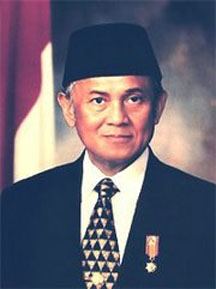
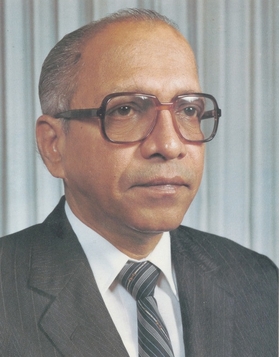
Raja Ali and Jeyaratnam (below, right) have a wealth of experience in the field of investment banking

According to sources, negotiations are being pursued at the moment, which are close to fruition and when completed, will result in ECM adding a new major core business to its current single staple of financial services activity, which will see its business transcend domestic boundaries.

“The new business is involved in a global high growth sector,” says a source. As a result of the deal, it is also believed that ECM will see the entry of a couple of key shareholders who are notable and prominent personalities in the international corporate stage.

It is further believed that Datuk Tony Fernandes of AirAsia Bhd fame will also emerge as one of the key investors in the newly enlarged group.

Sources say that Kalimullah and Lim's `return' to ECM signals that there are bigger plans waiting to unfold for the group in which the two personalities will play a major role. At this juncture, no one is quite ruling out the possibility that it may eventually result in them raising their stake in ECM.

Also interesting is that the rumour mill has been churning out speculation that ECM's investment banking business is up for grabs. However, sources close to the company deny such talks, saying that until the group manages to maximise the value and grow its investment banking business in terms of scale and profitability, it is not likely to be divested.

ECM, borne out of a highly publicised merger between ECM Libra Bhd and Avenue Capital Resources Bhd (ACRB) last June, provides a whole array of financial services namely investment banking, stockbroking, asset management and principal finance and investments.

The holding company of the enlarged group was incorporated on October 24 2005 as Avenue International Capital Bhd to facilitate a reorganisation exercise of ACRB Group, which saw the listing status of ACRB on Bursa Malaysia's main board transferred to ECM Libra Avenue on June 28 2006.

The shocking exit

In August last year, Kalimullah, ECM co-founder David Chua, as well as Khairy Jamaluddin, son-in-law of Prime Minister Datuk Seri Abdullah Ahmad Badawi, disposed of their stakes in the company. Both Chua and Khairy sold off their entire interest in the group while Kalimullah retained a stake of just under 5%.

At that point, tensions were running high, and there appeared to be much scrutiny among a pocket of society over the individuals' business involvements, more so in relation to the merger deal that was proposed between ECM Libra and Avenue Capital Resources Bhd.

Both Kalimullah's and Khairy's stakes were acquired by Amcorp Group Bhd while Chua disposed of his entire shareholding to a foreign fund management company.

“I am giving up to protect ECM,” Kalimullah had then said in an interview with a business magazine.

However, there appeared to be some disappointment among investors of ECM who bought into the company's shares on the potential that these well-connected and influential businessmen would be able to drive ECM to greater heights, more so because the investment banking business is very much one that thrives on relationships and networking.

“For as long as these individuals were in the driver's seat of ECM, investors thought there could be upside to be gained from investing in its shares. But when they left, some investors were nonplussed,” says an observer.
It appears that these individuals, or at least two of them, will soon be back in ECM to make good that promise of potential.

Yet, thus far, ECM has made some good strides and progress in the financial services sector.

For the year ended January 2007, sales rose by about 55% to RM121mil from the previous financial year. Group sales for the fourth quarter increased to RM41mil from RM16mil in the preceding year's corresponding quarter.

The improvement was largely attributed to better performance of the group's stockbroking business given the much-improved trading volume in the local bourse and higher placement fees.

Higher operating cost for the year, largely due to the combined costs of the merger (with ACRB), however led the group to post a lower pre-tax profit of RM19mil for the year against RM54mil previously. The decrease was also due to rationalisation expenses of RM17mil.

Considering the market's euphoric performance so far this year, ECM's performance for the first quarter of the year is likely to see further improvement, says an analyst.

In addition, the group's stockbroking subsidiary ECM Libra Avenue Securities Sdn Bhd is awaiting the approval of Bank Negara for an investment banking licence, which analysts reckon will materialise pretty soon and will allow the group to offer a more comprehensive range of investment banking activities which it currently is not able to do namely deposits taking.

According to global deal flow data provider Dealogic ECM Analytics, ECM Libra Avenue Securities ranked top spot in book runners for share placements (in terms of deal value and number of shares) in the primary and secondary market (refer to table).


Beefing up the IB team

The IB team of ECM is currently run by group deputy CEO T. Jeyaratnam who left Aseambankers to join the group in October last year. He replaced Cheah Teik Seng, who stepped down as CEO and is currently involved in a private equity firm.

With over 20 years experience in the field of investment banking, Jeyaratnam brings to the group a wealth of experience in corporate finance knowledge and skills. Chartered accountant Raja Ali Raja Othman, the deputy chief executive officer of the group's investment banking business, also has a sound knowledge and experience in both financial and corporate advisory services.

“The group has hired many skilled and experienced personnel to drive its IB and equity capital markets business. It's still on a recruitment drive. Almost everything is in place,” says a source close to the company.

The group has also been in the corporate limelight recently with the emergence of Tan Sri Azman Hashim as the single largest shareholder. He raised his interest in the company from 7.4% to over 22% after acquiring a block of shares in ECM from Aroma Teraju Sdn Bhd – a vehicle of the Minister of Finance Inc in late February this year.

While this has led to speculation that Azman has plans to play a bigger role in the company, other astute market observers say it may more likely be a pure investment opportunity for the banker.

The slew of changes in ECM has also attracted significant interest in the counter. Year to date, ECM shares have fared relatively well and have gained over 40%. It emerged as the third most heavily traded counter on Friday, gaining 7 sen to close Friday at RM1.04.


Monday, March 26, 2007

Problems of NEP: Is it the Policy or its Implementation


(Link edited by YM)

Former Deputy Prime Minister, Tun Musa Hitam seems to be playing to the non-Malay gallery. Last Dec in an interview with the largest circulated daily newspaper in the country, Sin Chew Jit Poh he was quoted as telling the GLCs to stop pinching Malay professionals from Chinese enterprises.

The story was picked up by the Sun newspaper on Dec 19. I find such a call most intriguing as I keep wondering how many Malay professionals have the GLCs pinched from the Chinese enterprises?

Subsequently I wrote to the Sun seeking Tun Musa to tell us how many Malay executives have the GLCs pinched from Chinese enterprises. For I keep wondering whether there are enough Malay professionals being employed in Chinese enterprises for them to be pinched in the first place? As expected the letter never got to see daylight.

(In that letter to the editor e-mailed on Christmas Day last year I had also responded to Chairman of the Malaysian Chapter of Transparency International, Tan Sri Ramon Navaratnam who had claimed that it was difficult for non-Malay companies to employ Malay professionals. In the report (Dec 21 issue of the Sun) he justified his claim to the “unavailability of suitably qualified Malay professionals and those with the right corporate values and attitudes of diligence and commitment”.

Isn’t it odd that on the one hand Musa had asked the GLCs to stop pinching Malay executives from the Chinese companies but Navaratnam had claimed that it was difficult for chinese companies to employ Malay executives and professionals. So if there are so few Malay professionals and executives being employed by the Chinese companies what is there for the GLCs to pinch? I found such claim really incredulous. I am sure Malay professionals would take umbrage to Navaratnam’s claims that Malay professionals and executives do not have the right corporate values and attitudes of diligence and commitment.

Navaratnam had also blamed extremists (Malays) for perpetrating and encouraging the myths of non-Malay companies not wanting to employ Malays. But I countered if what the Malays think as mere myths then he should give the figures to show otherwise. I am sure the Malays would like to know the number of Malay executives and professionals as well as the number of Chinese companies that have employed them.

It seems he made the generalisations that non-Malay companies find difficulty in getting Malay professionals just on the basis of an experience of the Sunway Group where he is a director. But I believe Sunway faced such difficulties out of its own reputation vis-à-vis the Malay professionals.

Navaratnam also claimed that the Malay professionals prefer to work in GLCs and government service where they are more comfortable. My rejoinder: so the Malay professionals are not suitable for non-Malay companies but they are OK with the GLCs and government because the government entities do not require diligence nor commitment from their staff? Is that why they are more comfortable there? So the Malays are not diligent nor committed in their work? Doesn’t such remarks smack of racialist sentiments?)

And in the face of such unprofessional and racist attitude by a very senior non-Malay corporate figure we now have a decision by the Advisory Panel of the Iskandar Development Region – made up of five very wise and influential men – that the race quota favouring the Malays should be done away with. The other members are tycoon Robert Kuok, Tan Sri Samsudin Osman former Chief Secretary to the Government, prominent Indian business tycoon Tan Sri Kishu Tirathai and economist Datuk Andrew Sheng.

Musa who made the announcement gave this reason: the Iskandar Development Region being actively promoted to upgrade development efforts in southern Johore can only succeed if policies favouring the Malays are dropped.

The IDR is the biggest project announced by the present government with the hope that it could spur economic growth with greater foreign participation not just for southern Johore but extending to other parts of the country as well.

It is indeed odd that a lot of people are making out as if affirmative action for the Malays is becoming a hindrance to greater economic growth. Foreign Direct Investment in the country is said to have dropped to RM15billion in 2005 from RM17.6 billion in 2004. And it looks as if the affirmative action in favour of the Malays is being made the scapegoat. Musa seems to agree. Thus the Advisory panel’s recommendations as articulated by Musa.

But we also know that foreigners would invest wherever they can make money even if they have to comply with various local requirements. So what’s the drift?

Is the NEP the real problem for it to get such a bad reputation? As I see it the problem is not the policy but its implementation. How can we blame the policy for the various problems when undeserved so-called Malay companies are selected for various jobs and projects merely because of political connections and other unprofessional considerations? In the end the Malays get the ‘shit’.

Now if implementation of the policy is at fault, the remedy is to ensure better and more transparent implementation. Do away with the political connections, the patronage and the ‘greasing of the palms’ for approvals. Not to discard the policy.

In any decision over awards of contracts or whatever jobs only the genuine Malay company should be considered. The rent seekers should not be considered at all. But this does not mean that a real working partnership between the Malay and non-Malay should not be considered.

It looks as if for the sake of the IDR we are willing to forgo anything, not just compromising Malay interests, but even to the extent of compromising our sovereignty over the region to the Singaporeans. Under the proposals Singaporeans can come and go as they pleased without having to go through Immigration and Customs formalities. It looks as if Johore is being made the playground for the Singaporeans.

Comparison is being made of how Shenzen in China had developed after being tied with Hong Hong. But it must be remembered that Hong Kong and Shenzen are part of the same country, whilst Singapore and Malaysia are two different nations.

And we know the mentality of the Singaporeans and how they looked upon us. But we seem to be going out of our way to please the Singaporeans.

A newspaper columnist Gavin Yap earlier this month has this to say of the Singaporeans arising from an encounter he had with a Singapore chick. She had kept on boasting of the many more opportunities available in the republic than in Malaysia, “better this, better that, more professional, more talent, blah, blah, blah”.

He wrote: “When I meet Singaporeans in Singapore, they never come across as annoying as they do when I meet them here. I mean, they're still annoying but something happens to them once they cross the bridge, I don't know. It's like they get possessed by demons hell-bent on making as few friends as possible.

“They get out of their car, look for the nearest local and hit them with the verbal equivalent of a baseball bat — Singapore this, Singapore that, cleaner, more efficient, everything works, everyone's pretty, everyone's rich, no crime, no pollution, no war, no sex, no fun, no problem!

“Yet, the moment they get here, every single one of them starts enjoying the simple freedoms that are not afforded to them back in their sterilised utopia. What freedoms, you ask? Well, let's count them, shall we?

“Littering, smoking, chewing, sucking, drinking, laughing, smiling, flicking, eating hawker food that actually tastes good, and meeting people who have the guts to venture outside without an Armani T-shirt. You see where I'm going with this?

“So, what gives, neighbours? What's the deal with the superiority complex? We know you've done well for yourselves. We know your shopping malls rock. We know your cinemas show uncensored movies. We know you're very pleased with your public transportation. We know you're very proud of your Esplanade.”

I responded to Mr. Yap’s very perceptive piece in a letter to the editor a few days after that. You guess it: the letter also never saw daylight.

Some excerpts: Actually I think the Singaporeans' behaviour towards us is not because they think they are superior. In fact it's the converse.

Deep within them is their inferiority complex of being small, a dot on the map as described by former Indonesia President, B.J. Habibie. Their being successful is to a certain extent also due to their being exploitative in their relationships with their immediate neighbours ie Indonesia and Malaysia. Thus this obsession to convince themselves that they are better. The one-upmanship, the kiasu mentality.

And at the same time they have this fetish of either Malaysia or Indonesia want to gobble them up. Thus the fortress mentality.

Their coming into being is also not something they would want to cherish. Especially when comparing to other countries that attained their independence after so much of struggles against their colonial masters and the sacrifices made by their people.

While in their case they were actually 'kicked out' by the founding first Prime Minister, Tunku Abdul Rahman Putra after the island's leaders, especially Lee Kuan Yew who went on the offensive to play up racial issues during the 1964 elections when the PAP contested for a number of seats for the federal parliament. Such campaign tone could compromise the somewhat fragile relationships between the Malays and the non-Malays then.

Despite the combative nature of the campaign by their leaders spearheaded by Lee Kuan Yew who had harped on the "Malaysian Malaysia" issue and continuously questioned Malays rights as enshrined in the Federal Constitution, the PAP lost. The Malaysian Chinese refused to be baited and thus only one of the PAP's candidates, C.V. Devan Nair who stood in Bangsar was returned even though the party had contested only in Chinese predominant areas.

Still Lee Kuan Yew cannot accept facts and continued with his "Malaysian Malaysia" rhetoric to the extent that by 1965 the atmosphere was racially charged and could easily have sparked some ugly incidents. The Tunku then felt it was becoming untenable and decided to cut off the cancerous lump thereby denying the PAP from continuing with its devisive rhetorics.

Lee Kuan Yew was stunned by the Tunku's reaction and decision. To their credit they not only survived the trauma of being cut off but made the best of that situation to carve out for themselves to becoming a developed nation within the space of less than 40 years.

Unfortunately they made the mistake of consulting and engaging the Israelis as their advisors since they had drawn a parallel to their existence of being surrounded by the Malays (Malaysia and Indonesia) to that of Israel which is surrounded by the Arabs.

But they forget that Singapore is no Israel. Singapore is a legitimate entity even if formed by being not wanted by the Malaysian leader then. Israel is not. It was illegally and artificially created by the British (the Balfour Declaration of 1917 made in a letter by the British Foreign Secretary, Arthur James Balfour to Lord Rothschild, a British Jewish leader for transmission to the Zionist Federation following the breakup of the Ottoman Empire with Britain agreeing to the Zionist plans for a Jewish "national home" in Palestine and then forcibly brought into being to place all the Jews unwanted by Europe in the land already occupied by the Palestinians after the Second World War).

So the Jews do have a legitimate fear of being pushed out by the Palestinians whose land they had illegally confiscated and occupied leading to millions of Palestinians being displaced as refugees until today. But this is not the case for Singapore. So what do they have to fear from Malaysia or Indonesia? Indonesia let alone Malaysia is not going to overrun that island. So why this obsessive fear and the siege mentality?

This can be explained by Lee Kuan Yew's obsession of making Singapore the rugged society able to withstand any pressures inside or outside. And the belief that they cannot be seen to give away anything lest they be seen as a weakling. So they need this self assurance that they are not 'pliable'.

And this uncompromising attitude has brought them to the current very low ebb in their relationships with Indonesia and Thailand. They cannot be seem to be weak at all but must always flex their muscles.

(Their relationships with Malaysia is no different. We still have the four unresolved issues to contend with even if the current leadership had placed them on the back burner merely because we are groveling to be pally with them and opening up the Iskandar Development Region to the full for the Singaporeans).

Thus the statement by its Foreign Minister, George Yeo earlier this month is not surprising at all. This is what he said: "From time to time we must expect countries to pressure us in the hope that we will give way to their demands. Singaporeans know that if we give in to such pressure, we would only invite more such pressures," so said Yeo in the Singapore parliament.

Their huge defense expenditure (averaging RM20billion a year) for the past 10 years has ensured the republic's armed forces especially its air force to be equipped only with the latest and the best war machines including combat air crafts and armaments including missiles.

This attitude of its leaders has rubbed off onto the ordinary Singaporeans. So Mr Gavin Yap's description of them is apt. They are so docile in their homeland but seem to be let loose as if they don't know what to do once out of their cage.